Aperitivo In Milan: Times, Prices And The Rules That Actually Shape Your Evening
Aperitivo in Milan is a paid drink plus an included buffet, usually running from about 18:00 to 21:00, with spritz prices spanning EUR 3.50 at a neighborhood bar to EUR 21 on a Duomo terrace against a citywide average of EUR 16.66. This guide covers the mechanics, the prices and the 2026 rules.
Short answer
Aperitivo in Milan typically runs from about 18:00 to 21:00, with the buffet at its best early. A spritz costs anywhere from EUR 3.50 at Picchio to EUR 21 at Terrazza Aperol by the Duomo, against a 2026 citywide average of EUR 16.66. Apericena, the dinner-sized version, costs roughly EUR 10-14 per drink in Navigli and Isola.
Milan is the city where the paid-drink-plus-buffet deal became a civic ritual rather than a marketing gimmick. Walk through Navigli or Isola on any weekday evening and you will see the same scene: a counter of pasta salads, focaccia and cold cuts, a line of glasses, and a crowd that treats the whole thing as dinner's opening act. The mechanics are simple once someone explains them, and almost nobody does. This page does.
The pricing is the part that surprises visitors most. The same Aperol spritz that costs EUR 3.50 at one bar costs EUR 21 at another, and both are within the city limits. There is also a municipal ordinance in force through 2 November 2026 that changes what a late evening in the center looks like, and it applies to the exact districts where most aperitivo happens.
What Time Is Aperitivo In Milan?
Aperitivo in Milan runs roughly from 18:00 to 21:00, with most bars laying out the buffet between 18:00 and 18:30 and replenishing it until around 20:30. The sweet spot for a well-stocked spread is 18:30 to 19:30, before the post-work crowd strips the best plates. After 20:30 you are buying the atmosphere more than the food.
Bars in Milan open far earlier than the aperitivo window, but the buffet only appears when the evening trade starts. The after-work crowd arrives in waves: office workers from the surrounding towers first, then later arrivals who have gone home to change. If food matters to you, come with the first wave. Buffets are typically replenished on a rolling basis, but the replenishment slows as the evening goes on, because the bar is winding toward the dinner service or, in apericena venues, holding the buffet until about 22:00.
Weekends shift things slightly later. On Fridays and Saturdays the aperitivo crowd blends into the night crowd, and some Navigli bars keep a buffet out until 22:00 or later, since the 2026 movida ordinance allows outdoor table service to continue past midnight in most zones. Sunday aperitivo is quieter and, in several classic venues, the most relaxed version of the ritual.
One planning note worth more than any bar recommendation: the ordinance in force from 11 June to 2 November 2026 bans the retail sale of alcohol from 22:00 across twelve named zones including Navigli, Brera and Isola. That does not stop a bar from serving you at a table, but it does mean the buy-a-bottle-and-sit-by-the-canal version of the evening ends at 22:00. We cover the full ordinance further down.
For a fuller run of the timing question, including how the Milan schedule compares with the rest of Italy, see what time aperitivo runs across Italy.
What Does A Spritz Actually Cost In Milan?
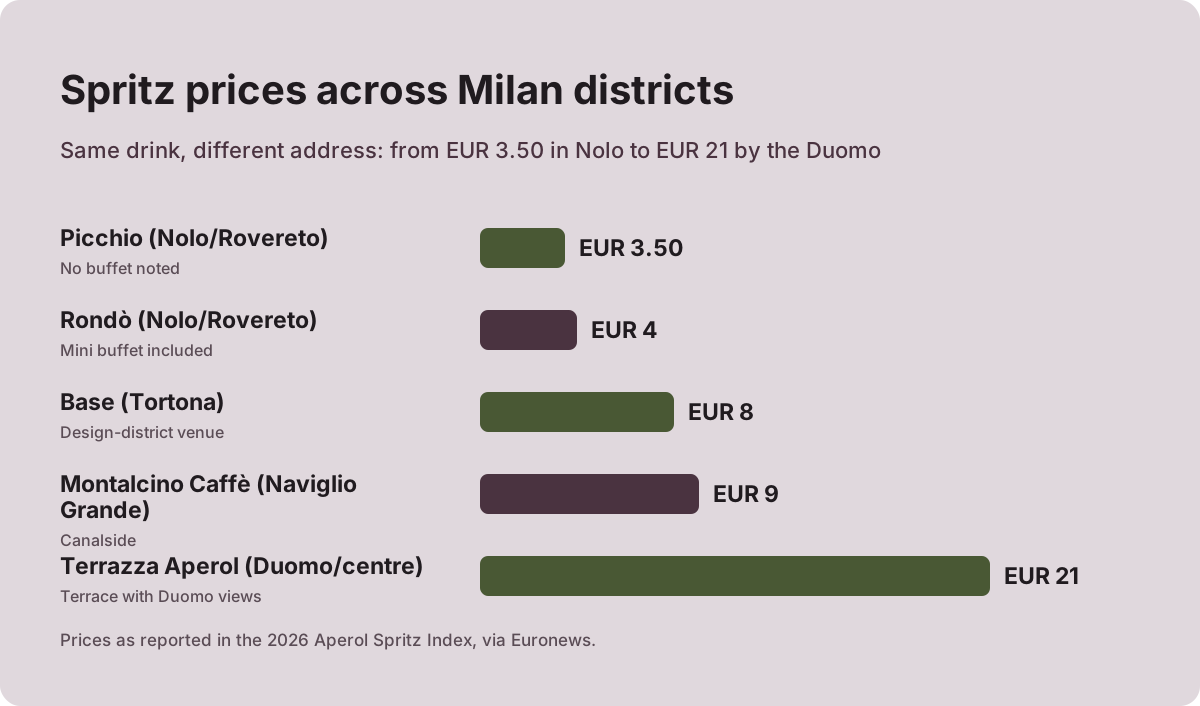
A spritz in Milan costs between EUR 3.50 and EUR 21 depending entirely on where you drink it, against a citywide Aperol Spritz Index average of EUR 16.66. The cheapest named prices sit in the Nolo and Rovereto districts, while the Duomo terrace venues charge six times the neighborhood rate for the same drink, and the difference is the address, not the pour.
The price spread is the single most useful thing to understand about Milanese aperitivo, because it turns an apparently arbitrary cost into a decision. Corriere della Sera and its sister titles have documented named venue prices across the city, and they make the pattern plain.
| Venue | District | Spritz price | Notes |
|---|---|---|---|
| Picchio | Nolo/Rovereto | EUR 3.50 | No buffet noted |
| Rondò | Nolo/Rovereto | EUR 4 | Mini buffet included |
| Base | Tortona | EUR 8 | Design-district venue |
| Montalcino Caffè | Naviglio Grande | EUR 9 | Canalside |
| Terrazza Aperol | Duomo/centre | EUR 21 | Terrace with Duomo views |
Read that table as a map of what you are paying for. The EUR 3.50 spritz at Picchio and the EUR 4 spritz with mini buffet at Rondò are neighborhood prices in districts where locals drink. The EUR 8 at Base in Tortona and EUR 9 at Montalcino Caffè on the Naviglio Grande reflect design-district and canalside rents. The EUR 21 at Terrazza Aperol buys the Duomo skyline, not a better drink. None of these prices is wrong; they are just selling different things.
The citywide average of EUR 16.66 comes from the 2026 Aperol Spritz Index, reported by Euronews, and it tells you something the individual prices do not: the average is dragged up by the center, which means most visitors who drink near the Duomo are paying close to double what the city as a whole pays. Walk out past the ring of the centre and the price structure changes completely.
Where Is The Best Aperitivo In Milan?
The best aperitivo in Milan is in Navigli for the classic canalside scene, Isola for a younger local crowd, Brera for cocktail-bar quality at EUR 12-18 per drink, and the Duomo and Galleria area for historic venues like Camparino in Galleria, ranked 18th in Europe's 50 Best Bars 2026. Each district does a different version of the ritual.
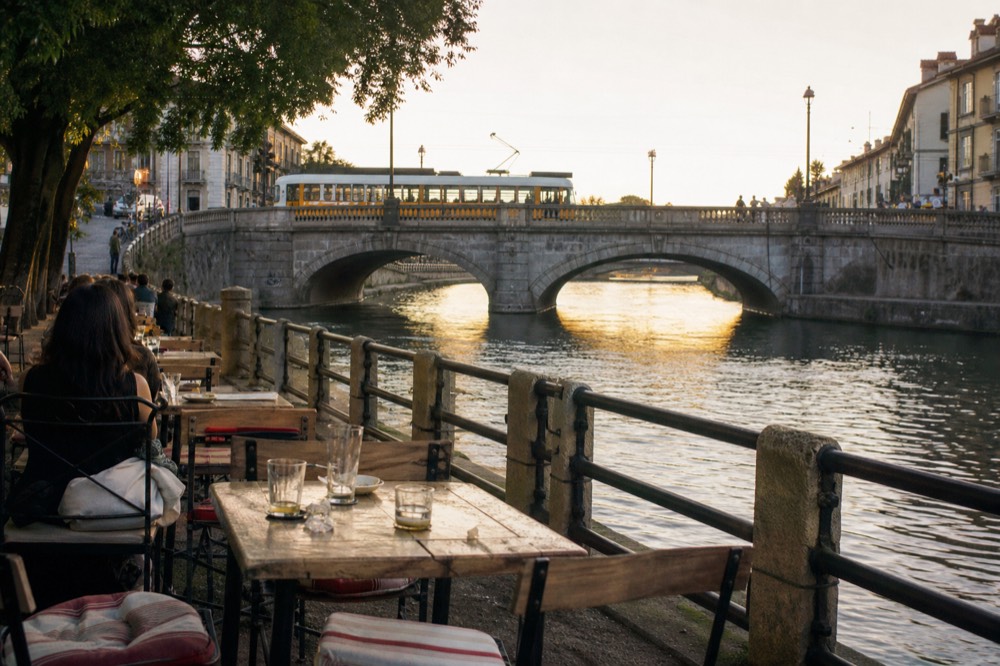
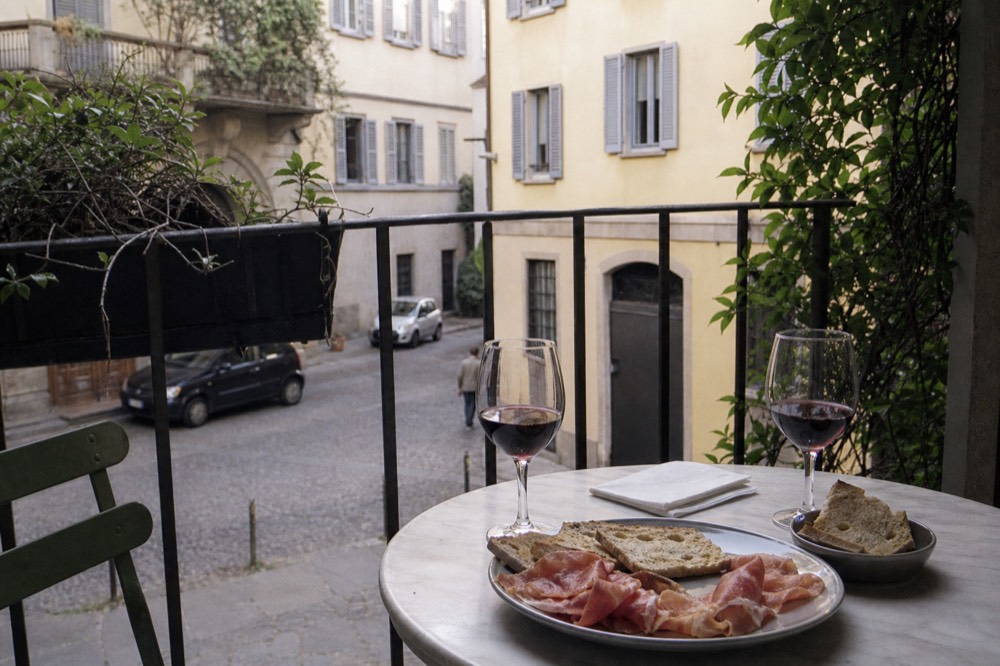
Navigli is the postcard version: outdoor tables along the Naviglio Grande, buffet spreads, and the largest concentration of aperitivo venues in the city. It is also the most tourist-heavy, which shows in the prices and the queues on summer weekends. The Darsena end has been redeveloped in recent years and is the more pleasant stretch to start from.
Isola is where the apericena format is strongest, with refillable buffets at roughly EUR 10-14 per drink and a crowd that skews local. The district's food scene has grown quickly, and a no/low-alcohol enoteca opened there in September 2026, a sign of where the neighborhood's drinking culture is heading.
Brera trades buffet quantity for cocktail quality. Drinks here run EUR 12-18, the bars are among the best in the country, and the food is more likely to be a curated small plate than a self-service spread. The center around the Galleria is where the history sits: Camparino in Galleria placed 18th in Europe's 50 Best Bars 2026, and Moebius Milano, ranked 6th, is the best bar in Italy on the same list. Milan also hosts the World's 50 Best Bars awards ceremony in early October 2026, which tells you how seriously the city takes this category.
If you want the canalside evening mapped out for you rather than researched on the spot, a guided walk is the efficient route.
The sunset walk by Do Eat Better covers the Navigli aperitivo plus street food stops over three and a half hours, from $105.3 per person, rated 4.7 across 634 reviews, with free cancellation up to 24 hours. The listing shows 10 or more bookings in the past week, which is consistent with how the canalside evenings book up in summer.
For readers planning a full evening in the district, our Navigli restaurants guide covers where to sit down once the aperitivo hour is over.
Aperitivo Vs Apericena: What Is The Difference?
Aperitivo is a drink plus a light included buffet meant to open the evening, typically EUR 8-12 per drink in Navigli and Isola. Apericena is the same format scaled to replace dinner entirely, with a substantial refillable buffet that runs until about 22:00 to 22:30, at roughly EUR 10-14 per drink. The difference is quantity, duration and intent.
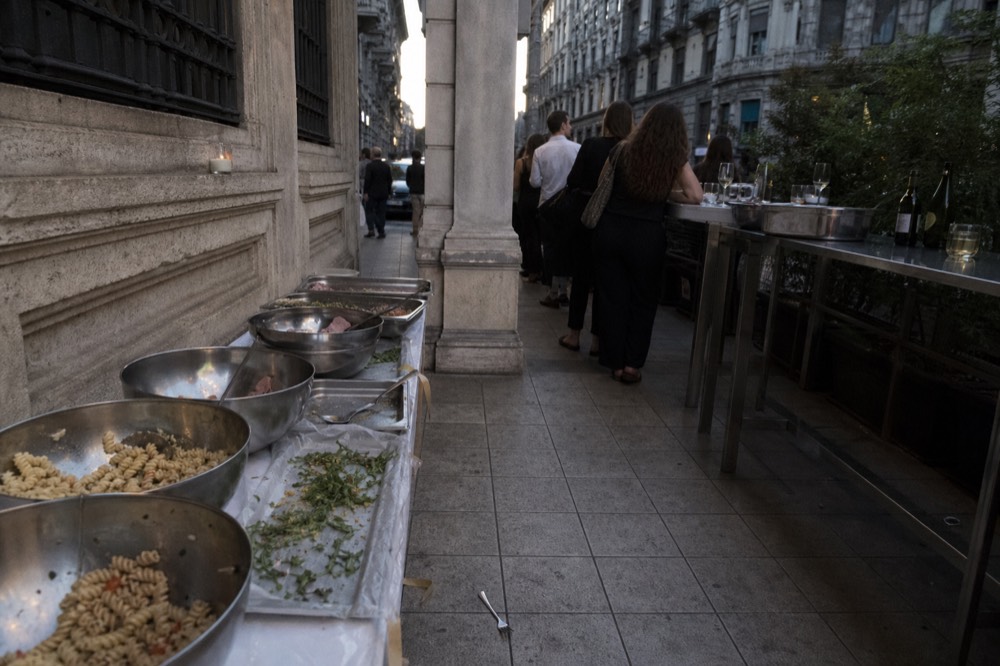
The distinction matters because visitors routinely order aperitivo expecting dinner and leave hungry. A true aperitivo buffet is a pre-dinner spread: a few pasta salads, focaccia, olives, maybe a cheese board. It takes the edge off; it does not constitute a meal. If you have a restaurant booking at 21:00, aperitivo is exactly right.
Apericena, a portmanteau of aperitivo and cena (dinner), flips the deal. The buffet is larger, hot dishes appear, and the bar replenishes it until roughly 22:00 to 22:30. For around EUR 10-14 per drink in Navigli and Isola, one or two drinks plus the buffet is a full evening's eating. The format remains strong in those two districts specifically; it is less common in Brera, where the cocktail is the point.
A note on the drink itself: the spritz is the default but not the only option, and the Campari family of drinks, the Negroni and the Milano-Torino all have Milanese credentials. Our piece on Italy's most popular aperitivo drink breaks down what people actually order.
Was Aperitivo Invented In Milan?
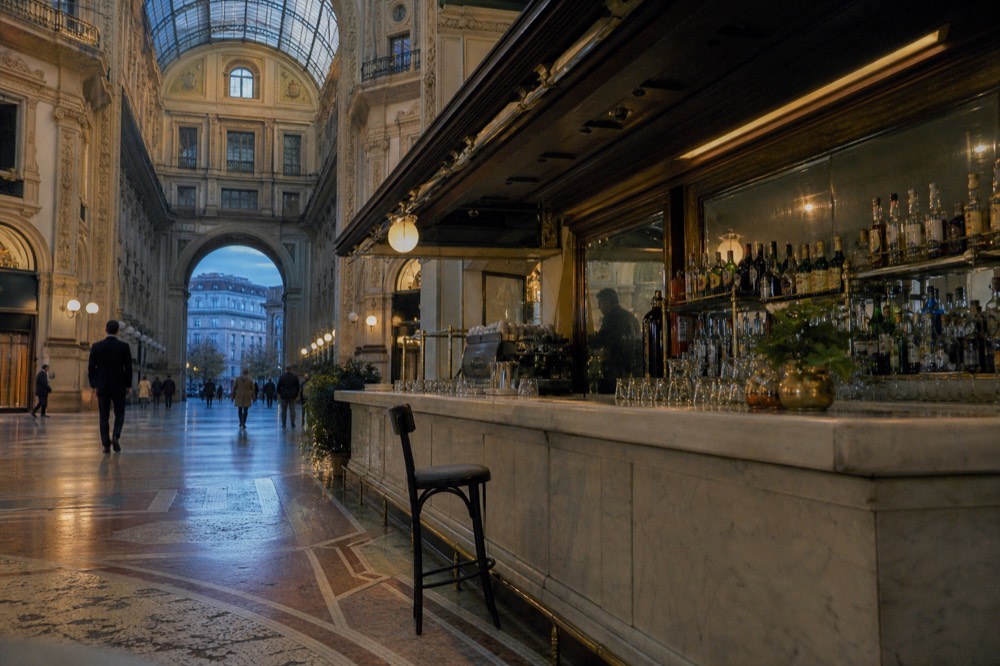
The documented history says Gaspare Campari opened Caffè Campari on the corner of the Galleria and Piazza Duomo in 1867, and his son Davide opened Camparino in Galleria in 1915 with a system piping soda water up from the cellars. What is not documented is the folk claim that the aperitivo ritual itself was invented at these addresses.
The company's own history page records the dates and the engineering, and that is where the verified story ends. Camparino's constant soda-water supply was a genuine innovation: a Campari and soda was always perfectly chilled, which mattered in 1915 and still does. The venue's interiors were made by Eugenio Quarti, Alessandro Mazzucotelli and Angelo d'Andrea, the Liberty-era craftsmen whose work defines the space. The Miani family ran the bar from the postwar years until 2018.
The wider claim, that aperitivo as a ritual was born at the Galleria corner, appears everywhere and is supported nowhere in the company's own sources. The honest version is that Milan industrialized early, had a large office class by the late nineteenth century, and the after-work drink with something to eat filled a real social need. The Campari venues are the most famous survivors of that culture, not necessarily its birthplace.
Camparino in Galleria today trades as "The Milanese Aperitivo since 1915", and its 18th place in Europe's 50 Best Bars 2026 confirms it as a destination rather than a museum. Expect to pay center prices for the privilege of standing where Davide Campari's soda system still runs. The bar's own history is documented on the venue's official history page.
How Does The 2026 Movida Ordinance Change Your Evening?
The 2026 movida ordinance, in force from 11 June to 2 November 2026 across twelve named zones, bans retail alcohol sales from 22:00, bans takeaway of alcoholic drinks from midnight, and closes outdoor table areas at 01:00 on weekdays and 02:00 on weekends. The zones include Navigli, Brera, Isola, Sarpi, Ticinese and the Darsena.
The twelve zones are Nolo, Isola, Sarpi, Cesariano, Arco della Pace, Como/Gae Aulenti, Garibaldi (excluding specified stretches), Brera, Ticinese, Darsena/Navigli, Cinque Vie and Bicocca. In practice, that is every district where you would plan an aperitivo evening. There is also a stricter Lazzaretto-Melzo ordinance banning takeaway of all food and drink, alcoholic or not, from 22:00 to 06:00.
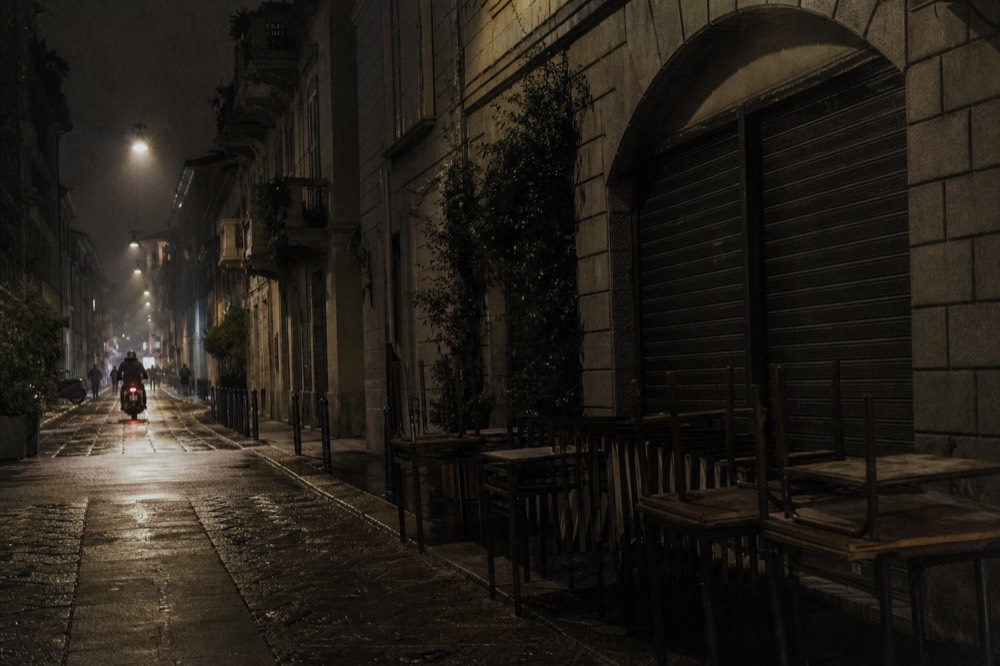
For a visitor, three practical consequences follow. First, table service continues normally: the ordinance restricts retail sale and takeaway, not a bar's ability to serve you at a table or dehors. Second, the buy-a-bottle-for-the-canal-wall crowd has to finish by midnight, and in the Lazzaretto-Melzo area even takeaway food stops at 22:00. Third, outdoor seating areas close at 01:00 on weekdays and 02:00 on weekends, which caps how late a canalside evening runs.
The ordinance is published by the Comune di Milano, and the detail is on the city's official announcement page. It runs to 2 November 2026, so summer and early-autumn visits are all inside it.
| Rule | Time | Applies to |
|---|---|---|
| Retail sale of alcohol banned | From 22:00 | All 12 zones |
| Takeaway of alcoholic drinks banned | From midnight | All 12 zones |
| Outdoor table areas close | 01:00 weekdays, 02:00 weekends | All 12 zones |
| Takeaway of all food and drink banned | 22:00-06:00 | Lazzaretto-Melzo only |
Can You Do Aperitivo As Part Of A Food Tour?
Yes, several Milan food tours build the aperitivo into a longer evening, and they solve the two hardest problems: knowing which bars replenish their buffet, and pacing the drinks across three hours of walking. The canalside aperitivo walk by Eating Europe runs three and a half hours from $110.74 per person, rated 4.9 across 545 reviews.
A guided aperitivo evening makes most sense for first-time visitors and anyone who does not want to gamble on buffet quality. The guides work these streets nightly and know which venues put out a real spread and which treat the buffet as decoration. The Eating Europe walk covers Navigli food and drinks with the aperitivo built in, listed at a current from-price of $110.74, a figure that can change, with free cancellation up to 24 hours. It meets at the Arco di Porta Ticinese.
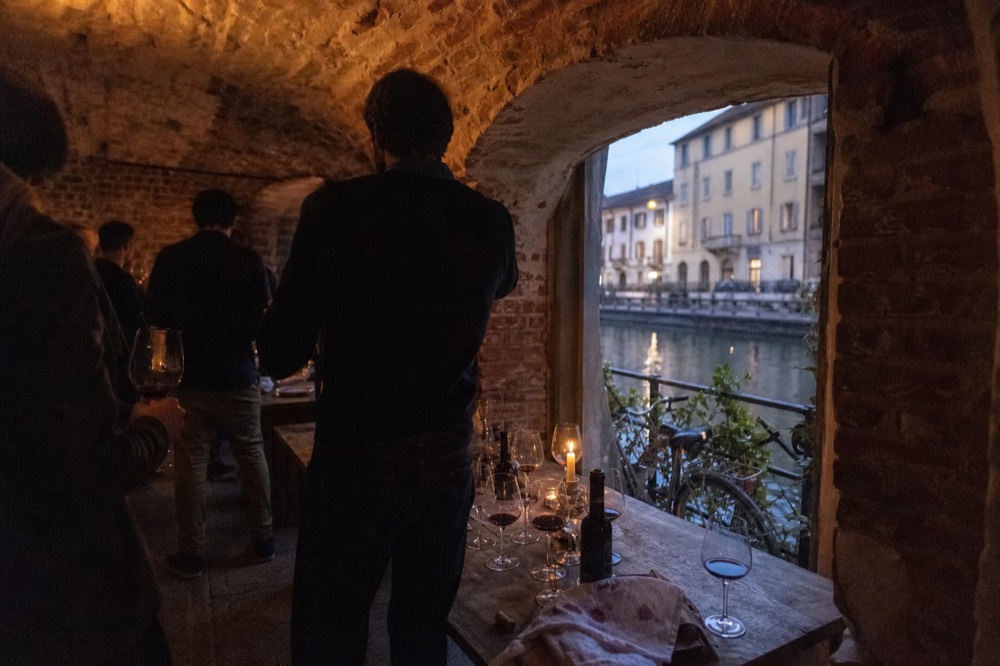
The other format worth knowing is the seated tasting. Cantina Urbana runs a 90-minute urban cellar wine tasting from $59.16 per person, rated 4.8 across 32 reviews, on Via Ascanio Sforza in the Navigli district. It is not aperitivo in the buffet sense, but it covers the same pre-dinner slot with a sommelier-led walk through Italian wines, and it is the cheapest structured evening on this list.
How Do You Plan An Aperitivo Evening Without Mistakes?
Plan aperitivo around three fixed points: arrive between 18:30 and 19:30 for the best buffet, budget EUR 8-12 per drink in Navigli and Isola or EUR 12-18 in Brera, and decide in advance whether you are doing aperitivo before dinner or apericena instead of it. The single most common mistake is treating a 20:45 arrival as aperitivo.
A few practical notes that come up repeatedly. The buffet is included in the drink price at most venues, but not all: some Brera cocktail bars serve a plated snack instead, and a few places charge a small cover. If the buffet matters, confirm it exists before you sit down. Coperto, the per-person cover charge, remains legal in Milan when listed on the menu, typically EUR 1-3.
Payment is straightforward: cards are widely accepted and receipts are always issued. Tipping is not expected at the bar, though rounding up at a table is normal. On the drink side, a spritz or a Negroni is standard, and ordering a cappuccino after the early evening marks you immediately as a visitor; the coffee rules in Italy are real and the coffee rule in Italy piece covers them in detail.
For timing against other plans: aperitivo slots neatly before a 21:00 dinner, which is itself on the early side for Milan, as our guide to dinner times in Milan explains. If you are pairing the evening with a Last Supper booking, remember that visit is a 15-minute slot with compulsory arrival 30 minutes early, so it belongs earlier in the day, not adjacent to aperitivo.
| Plan | Budget per person | Best window | District |
|---|---|---|---|
| Classic aperitivo before dinner | EUR 8-12 per drink | 18:30-19:30 | Navigli, Isola |
| Cocktail-bar aperitivo | EUR 12-18 per drink | 19:00-20:30 | Brera |
| Apericena replacing dinner | EUR 10-14 per drink | 19:30-21:00 | Navigli, Isola |
| Historic venue experience | EUR 16-21 per drink | Any evening hour | Duomo/Galleria |
Milan's aperitivo culture rewards a little planning and punishes none of it. The ritual is flexible, the price spread means there is a version for every budget, and the ordinance, far from ruining evenings, has made the late-night streets in the twelve zones calmer than they were. Whether you build the evening yourself around a canalside bar or let a guide handle the route, the mechanics above are all you need. Milan Food Tours covers the rest of the city's food culture, from markets to cooking classes, if the aperitivo hour leaves you wanting more.
These are the questions visitors ask most about aperitivo in Milan, answered with the same verified figures used throughout this guide: the timing window, the real price spread from EUR 3.50 to EUR 21, the apericena distinction, and the 2026 ordinance rules that shape a late evening in the twelve movida zones.
Common Questions About Aperitivo In Milan
What Time Is Aperitivo In Milan?
Aperitivo in Milan runs roughly from 18:00 to 21:00, with buffets laid out between 18:00 and 18:30 and replenished until around 20:30. The best-stocked window is 18:30 to 19:30. Apericena venues in Navigli and Isola keep substantial buffets going until about 22:00 to 22:30.
Where Is The Best Aperitivo In Milan?
Navigli for the classic canalside scene, Isola for a local apericena crowd, Brera for cocktail quality at EUR 12-18 per drink, and the Galleria area for historic venues: Camparino in Galleria ranked 18th in Europe's 50 Best Bars 2026, and Moebius Milano ranked 6th, the best bar in Italy.
How Much Does A Spritz Cost In Milan?
Between EUR 3.50 and EUR 21 depending on the venue. Picchio charges EUR 3.50, Rondò EUR 4 with a mini buffet, Base in Tortona EUR 8, Montalcino Caffè on the Naviglio Grande EUR 9, and Terrazza Aperol by the Duomo EUR 21. The citywide Aperol Spritz Index average is EUR 16.66.
What Is The Difference Between Aperitivo And Apericena?
Aperitivo is a drink plus a light buffet that opens the evening, typically EUR 8-12 per drink. Apericena is the same format scaled to replace dinner, with a refillable buffet until about 22:00 to 22:30 at roughly EUR 10-14 per drink, strongest in Navigli and Isola.
Can You Still Drink Outside Late At Night In Milan?
Under the 2026 movida ordinance, in force 11 June to 2 November 2026 across twelve zones, table service continues normally but takeaway alcohol is banned from midnight and outdoor table areas close at 01:00 on weekdays and 02:00 on weekends. Retail alcohol sales stop at 22:00.
Is Aperitivo Included In The Price Of The Drink?
At most buffet venues in Navigli and Isola, yes: the buffet comes with the drink. Some Brera cocktail bars serve a plated snack instead of a buffet, and a few venues charge a small cover. Confirm the buffet exists before sitting down if food is the point of your visit.
Milan Navigli Food And Drinks Tour With Aperitivo
Have your travel date in mind? Check the selected experience before arranging the rest of your Milan food day.
3 hours 30 minutes · English · Your guide will be waiting for you right in front of the main monument and wearing our purple Eating Europe bag!
Scheduled departure dates. Availability and final price are confirmed on Viator.
None of these experiences matches that choice. Adjust your preference or reset to the general recommendation.
Compare Options And Plan Your Visit
- Food and drinks along Navigli
- Choose this explicitly named experience format; current product restrictions still apply.
- Sunset street food walk
- Choose this explicitly named experience format; current product restrictions still apply.
- Short urban cellar tasting
- Choose this explicitly named experience format; current product restrictions still apply.
Before Booking
Minimum two guests for departure Under-4s may join free without food; food tickets start at age 4 Dietary adaptations on request, not guaranteed Not suitable for severe or life-threatening food allergies
Compare complete party totals in the same currency, including any transport, meals or extras you would otherwise buy.