Is It Expensive To Eat Out In Milan?
A costed answer to eating out in Milan: coffee, coperto, spritz prices from EUR 3.50 to EUR 21, the tourist tax, and a full day of eating at three budgets.
Is It Expensive To Eat Out In Milan?
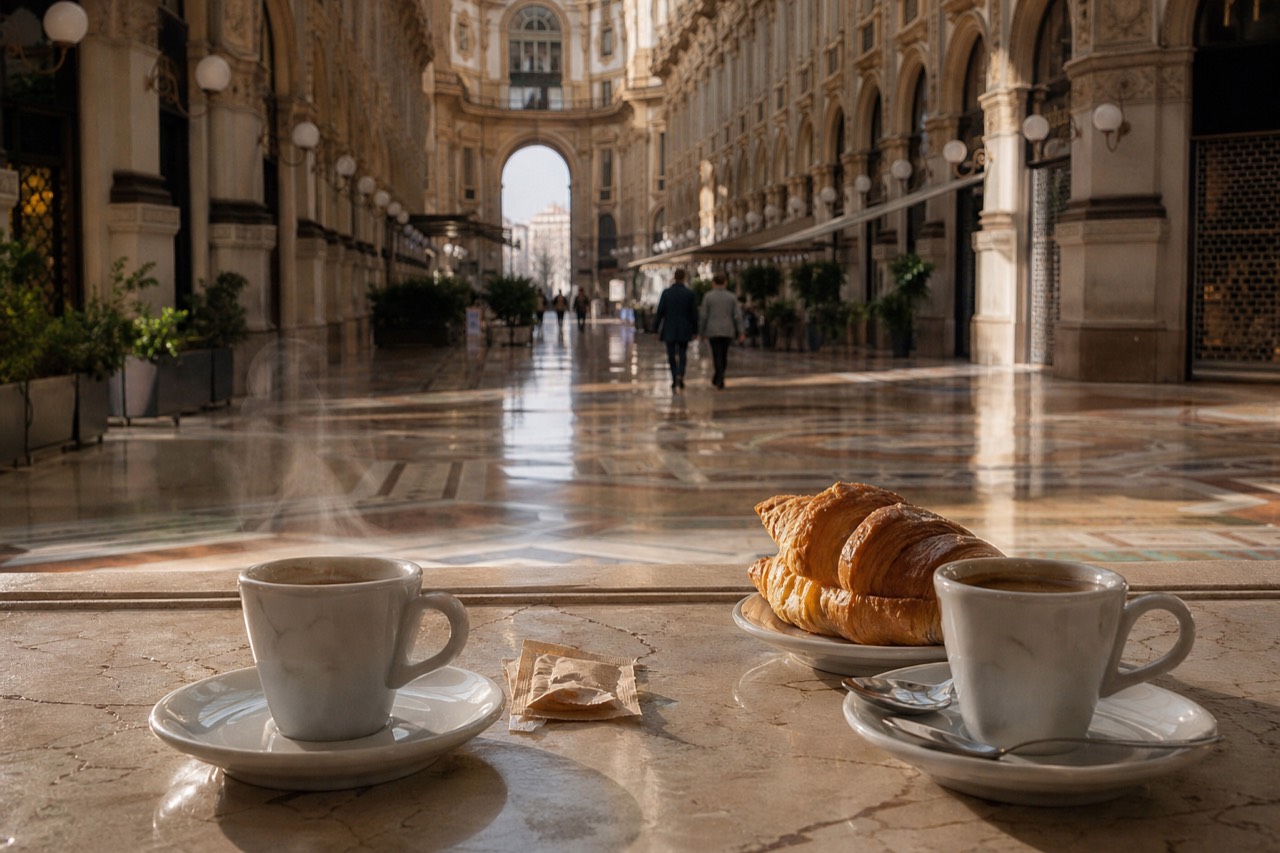
Yes, eating out in Milan can be expensive, especially once you sit down at a table for everything. A standing espresso can cost around EUR 1.20 at the bar while the same order at a table in prime position runs several times more, and a spritz ranges from EUR 3.50 in Nolo to EUR 21 by the Duomo. Your budget is set by where you stand, literally.
That spread is the honest answer. Milan has the highest average eating-out costs in the country, yet the same city lets you drink a named, press-reported spritz at Picchio for EUR 3.50 and charges EUR 21 for one at Terrazza Aperol a few metro stops away. Nothing about the liquid changed. What changed was the postcode, the chair and the view.
For context on the rest of the trip: a single ATM urban ticket costs EUR 2.20 and is valid 90 minutes, a 24-hour ticket is EUR 7.60 and a 3-day ticket EUR 15.50, per the operator's own tariff document. Those fares cover metro, tram and bus across the standard Mi1-Mi3 zone, so getting to a cheaper dinner neighbourhood costs less than a cappuccino at a tourist table.
The other fixed cost that surprises visitors is the tourist tax, charged per person per night on top of the room rate. From 1 April 2026 it runs from EUR 3 at a 1-star hotel to EUR 12 at a 5-star, and EUR 9.50 for short lets and B&Bs, per the Comune di Milano's tourist tax schedule. It does not change the menu prices, but it belongs in any honest daily budget.
If you want the eating itself partly pre-paid, a booked tasting walk turns a variable evening into a fixed number. These three cover the range:
What Does A Normal Day Of Eating Cost In Milan?
A realistic budget day of eating runs roughly EUR 25 to EUR 35 per person, a mid-range day EUR 50 to EUR 80, and a comfortable splurge day EUR 100 and up. Breakfast at the bar is cheap everywhere, lunch is where the standing trick pays off, and dinner plus aperitivo is where budgets either hold or break, depending on the neighbourhood and the chair.
Here is a costed day at three budgets, built from the named venue prices in the verified corpus. Treat it as a planning range, not a promise: individual restaurants move their prices, and seasonal menus shift.
| Item | Budget day | Mid-range day | Splurge day |
|---|---|---|---|
| Espresso or cappuccino and cornetto, standing at the bar | EUR 3-5 | EUR 5-8 | EUR 10-15 in a historic cafe |
| Lunch: pizza al taglio or panino standing, or a trattoria primo | EUR 8-12 | EUR 18-28 | EUR 40-60 seated, several courses |
| Aperitivo drink with buffet, Navigli or Isola | EUR 8-12 | EUR 12-18 in Brera | EUR 21 at a Duomo terrace |
| Dinner: trattoria or osteria, including coperto | EUR 15-25 | EUR 30-55 | EUR 70 and up |
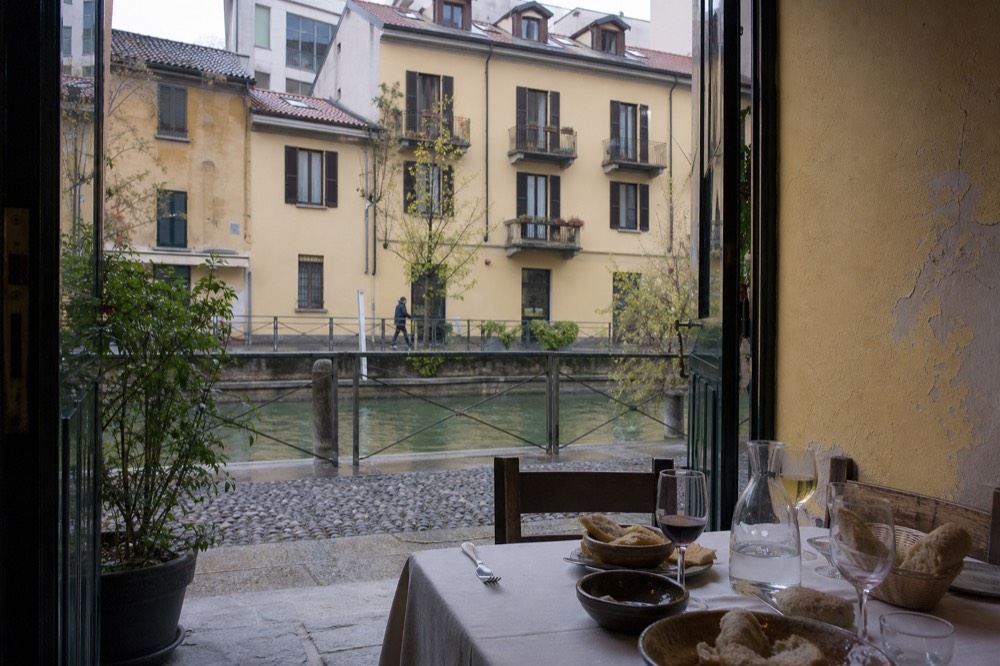
Two things bend these numbers fast. The first is the standing-against-sitting gap, covered in detail below, which can halve a lunch bill on its own. The second is the neighbourhood: Navigli, Isola and NoLo price noticeably softer than Brera or the streets immediately around the Duomo, where the same spritz commands a premium.
The honest comparison, and the reason this site exists, is that a booked tasting walk costs a fixed $49.69 to $116 per person on our roster while an improvised evening in Brera is a variable that can quietly exceed both ends of that. One is a number you know before you leave the hotel; the other is a number you discover when the bill arrives. For more on that trade-off, see how much a food tour should cost.
Why Does The Same Coffee Cost More When You Sit Down?
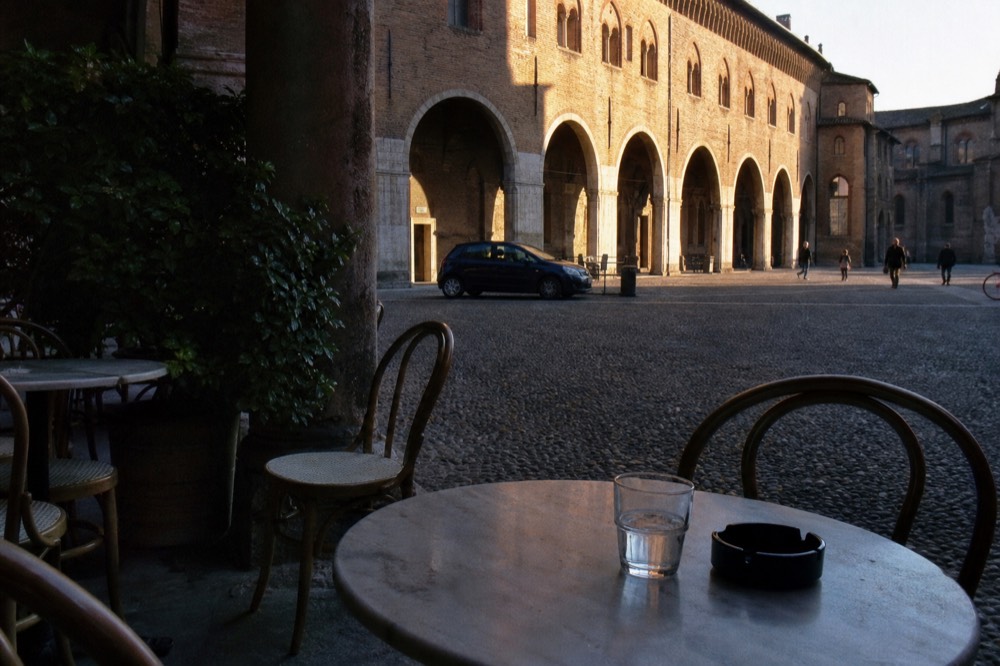
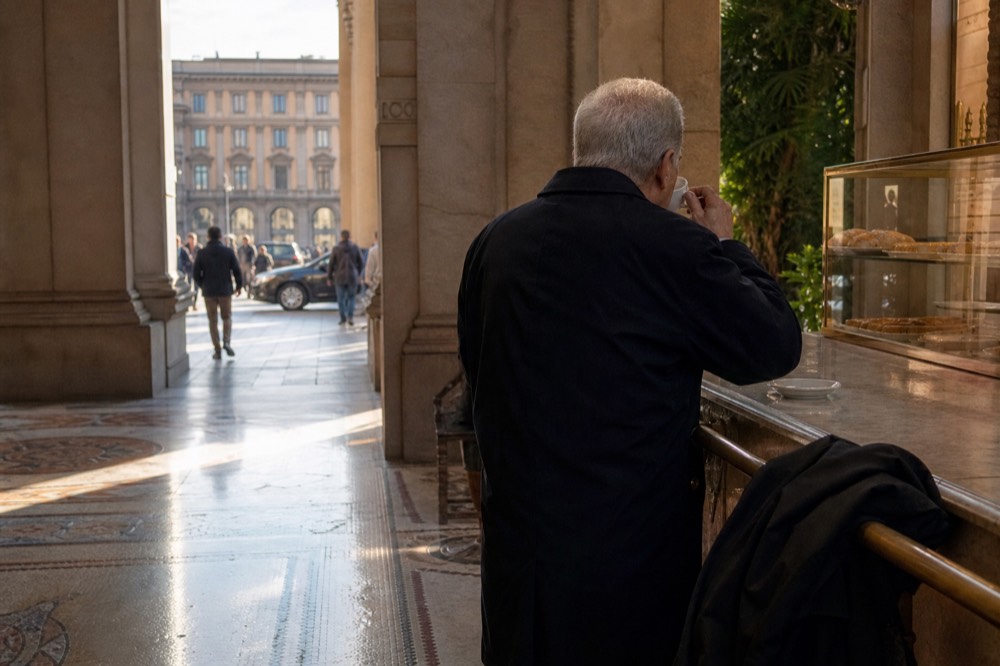
Italian cafes price the table, not just the drink, and Milan enforces this more visibly than most cities. Standing at the bar for an espresso or cappuccino costs a fraction of the seated price, sometimes a third or less in the historic centre, because the bar tariff and the table service tariff are two separate menus. Sitting on a terrace facing the Duomo is a rental agreement with a coffee attached.
This is not a scam aimed at tourists, though it catches plenty. It is how Italian cafe economics have always worked: the bar is for locals doing a two-minute espresso, the sala and terrace are for people occupying a table for an hour. The price difference is the rent on that hour.
Two related charges to expect on restaurant bills. The coperto, a per-person cover charge, remains legal provided it is clearly listed on the menu, and it typically runs EUR 1 to EUR 3 per person in Milan. It pays for bread, table setting and linen, and it is not a tip. Servizio, when it appears, is a service percentage and usually replaces the expectation of an extra tip. Check the menu's fine print before ordering rather than disputing the bill after.
| Charge or choice | What it is | Typical Milan cost |
|---|---|---|
| Coperto | Per-person cover charge, must be listed on the menu | EUR 1-3 |
| Servizio | Service percentage, sometimes in place of a tip | Often 10-15% where applied |
| Bar-standing espresso | Drunk at the counter, priced at the bar tariff | Around EUR 1.20-1.50 in local bars |
| Seated espresso, prime centre | Same drink, table tariff, historic location | Several times the bar price |
| Tap water | Not customarily served free; ask for acqua del rubinetto or order bottled | Bottled from around EUR 2-4 |
Water deserves its own line because it catches northern Europeans and Americans hardest. Free tap water with a meal is not the Italian custom; most diners order still or sparkling bottled water. You can ask for acqua del rubinetto and many places will bring it, but it is a request, not an entitlement, and budgeting a couple of euros per person per meal for water is realistic. For the wider etiquette picture, including what happens to unfinished plates, see whether it is rude not to finish your plate in Italy.
How Much Are Drinks And Aperitivo In Milan?
Named 2025-2026 press prices put a Milan spritz anywhere from EUR 3.50 to EUR 21 depending on the venue, and the 2026 Aperol Spritz Index put the citywide average at EUR 16.66. A standard aperitivo with buffet in Navigli or Isola typically runs EUR 8 to EUR 12 per drink, while cocktail-bar aperitivo in Brera runs EUR 12 to EUR 18, and VIP venues EUR 15 to EUR 25.
The named venues tell the story better than averages. Corriere della Sera's price reporting found the Rondo bar in the Nolo area charging EUR 4 for a spritz with a mini buffet, and Picchio at EUR 3.50. In zona Tortona, Base charges EUR 8; on Naviglio Grande, Montalcino Caffe charges EUR 9. At the top, Terrazza Aperol by the Duomo charges EUR 21, and the Aperol Spritz Index recorded a Milan average of EUR 16.66, reported by Euronews. That is one city, one drink, a sixfold spread.
The apericena format matters for budgets: in Navigli and Isola, a drink at roughly EUR 10 to EUR 14 comes with a substantial refillable buffet that runs until around 10 or 10:30 pm and can genuinely replace dinner. Done deliberately, apericena is one of the cheapest full evenings in the city. Done accidentally, three rounds at a Brera cocktail bar plus a restaurant afterwards is how a EUR 60 night becomes EUR 100.
One 2026 rule affects late evenings. The Comune di Milano's movida ordinance, published 9 June 2026 and in force 11 June to 2 November 2026 across 12 zones including Brera, Navigli, Isola and NoLo, bans retail alcohol sales from 22:00, takeaway of alcoholic drinks from midnight, and outdoor table use from 01:00 on weekdays and 02:00 at weekends. Seated aperitivo is unaffected; only the latest takeaway habits are. Timing questions are covered in full in what time aperitivo happens in Milan.
What Hidden Costs Hit Visitors In Milan?
The three costs visitors rarely budget are the tourist tax of EUR 3 to EUR 12 per person per night from 1 April 2026, the coperto of EUR 1 to EUR 3 per person at seated meals, and transport, where a single ATM ticket is EUR 2.20 and a day ticket EUR 7.60. None appear on any menu, and together they can add a noticeable daily sum per person before food.
The tourist tax is the biggest and least expected, because it is charged at accommodation, not at the restaurant, and it scales with where you sleep. The Comune di Milano's schedule, effective from 1 April 2026 under deliberazione n. 144 of 12/2/2026, sets the following per-person, per-night rates:
| Accommodation type | Tourist tax per person, per night |
|---|---|
| 1-star hotel | EUR 3.00 |
| 2-star hotel | EUR 4.00 |
| 3-star hotel | EUR 7.00 |
| 4-star hotel | EUR 10.00 |
| 5-star hotel | EUR 12.00 |
| B&B, short lets, holiday flats, affittacamere | EUR 9.50 |
| Youth hostels and campsites | EUR 3.00 |
Transport is the other quiet line item, and it is cheap if you use it correctly. A EUR 2.20 single covers 90 minutes across metro, tram, bus and the urban Trenord S-lines, and children under 14 travel free. The EUR 7.60 day ticket or EUR 15.50 three-day ticket beats singles from roughly the fourth journey onward, and contactless bank cards work at metro gates and on trams, so you never need to hunt a tabaccheria.
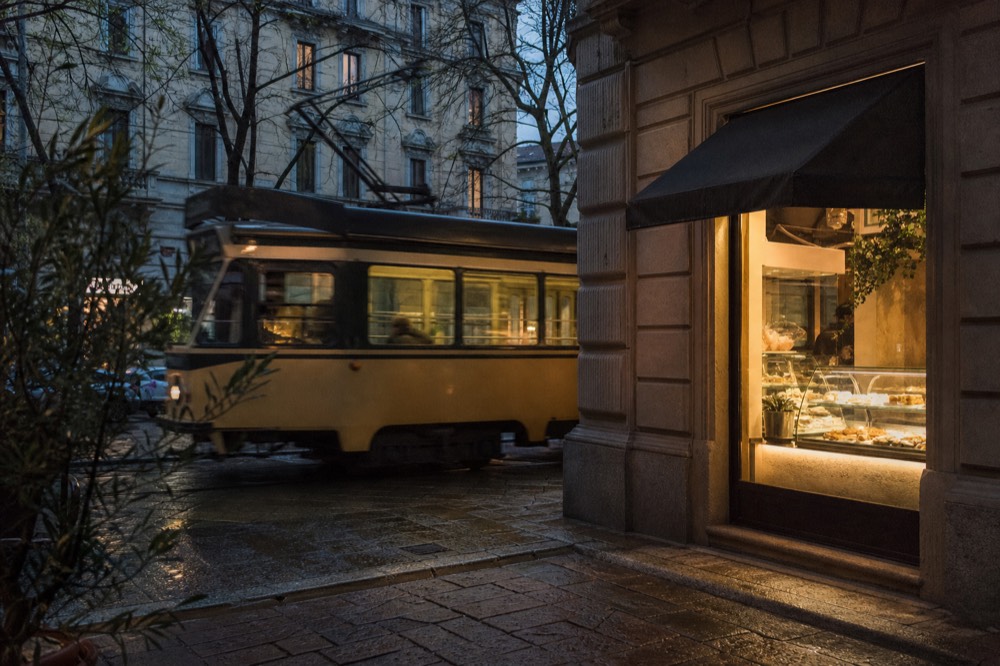
One cost that will not touch you on foot: Area C, the paid central limited-traffic zone, charges EUR 7.50 per day for a car but EUR 60 to EUR 150 for chauffeur-driven vehicles over nine seats, which is exactly why large food tours start on foot or outside the centre. As a walker, you pay nothing. As a driver, the Comune's own tariff PDF is the document to check before bringing any vehicle inside the gates on a weekday between 07:30 and 19:30.
How Does A Booked Food Tour Compare To Paying As You Go?
A booked Milan tasting walk on our roster costs a fixed $49.69 to $116 per person, against a self-guided eating evening that is a variable, commonly EUR 40 to EUR 90 per person once drinks, coperto and a seat are added. The tour is a known number with free cancellation up to 24 hours before; the evening is a running total you only learn at the end.
The cheapest structured option here is the Food Walk With City Sightseeing by Tours of Milan, from $49.69 per person, rated 4.6 across 26 reviews, 2 hours 30 minutes with several tastings folded in and the city's landmarks between stops. It meets at the Chiesa di San Maurizio al Monastero Maggiore on Corso Magenta, and the listing shows five or more bookings in the past week. For a visitor whose alternative is an unguided evening of table-priced coffee, seated spritzes and a trattoria dinner, it is often the cheaper of the two.
For a pure low-cost treat, few things in Milan beat the chocolate factory: Enrico Rizzi's Fabbrica del Cioccolato runs a 1-hour tasting tour from $35 per person, rated 4.6 across 68 reviews, meeting at Via Gian Giacomo Mora 18 with the M4 De Amicis metro stop given as the way in. It is the least expensive guided food experience on the whole roster, and it sits at roughly the price of two seated centre coffees.
The comparison is not really tour against restaurant. It is fixed against variable. A visitor who books a walk knows the number before the flight; a visitor who improvises through Brera meets the number at the till. Both can eat extremely well in Milan, which remains a city where the standing espresso, the EUR 4 Nolo spritz and the EUR 50-per-kilo artisan panettone coexist within one metro network. For the wider picture of what to order and where, the guides on Milan Food Tours are the place to start, beginning with what to eat in Milan and where to eat in Milan.
The short answers below cover the questions visitors ask most: whether Milan is expensive compared with the rest of Italy, what a trattoria dinner actually costs, whether the coperto is legitimate, how water is charged, whether aperitivo can replace dinner, and which guided food experience costs least. Each answer uses the verified figures from this page, so nothing here is guesswork or filler.
Common Questions About Eating Out Costs In Milan
Is It Expensive To Eat Out In Milan?
Yes, by Italian standards Milan is the most expensive city to eat out in, but the spread is enormous. A standing espresso costs around EUR 1.20 to EUR 1.50, a named Nolo spritz EUR 3.50, a seated Duomo spritz EUR 21, and a full budget day of eating can be done for roughly EUR 25 to EUR 35 per person. Where you stand and sit decides most of it.
How Much Is Dinner In Milan?
A trattoria dinner with a primo, water and coperto typically runs EUR 20 to EUR 35 per person; a mid-range osteria evening with wine runs EUR 40 to EUR 60; and fine dining starts around EUR 80 and climbs steeply. Milan holds 20 starred restaurants in the 2026 Michelin Guide, so the ceiling is very high, but the floor is lower than most visitors expect.
Is The Coperto A Tourist Scam?
No. The coperto is a legal per-person cover charge, typically EUR 1 to EUR 3 in Milan, provided it is clearly listed on the menu. It covers bread and table service and is not a tip. If it is not printed on the menu, you can query it; if it is, it is part of the bill.
Do I Have To Pay For Water In Milan Restaurants?
Bottled water is the norm and typically costs a few euros per bottle. Tap water is not customarily brought unasked, but you can request acqua del rubinetto and many restaurants will provide it. Budgeting EUR 2 to EUR 4 per person per meal for water is realistic.
Is Aperitivo A Cheap Way To Eat In Milan?
It can be. The apericena format in Navigli and Isola pairs a roughly EUR 10 to EUR 14 drink with a substantial refillable buffet until around 10:30 pm, and can replace dinner outright. In Brera cocktail bars, drinks run EUR 12 to EUR 18 and the buffet is thinner, so the same idea costs more and feeds less.
What Is The Cheapest Guided Food Experience In Milan?
On our roster it is the 1-hour chocolate factory tasting at Enrico Rizzi's Fabbrica del Cioccolato, from $35 per person, rated 4.6 across 68 reviews. The cheapest walking option with multiple tastings is the Food Walk With City Sightseeing, from $49.69 per person.
Milan Walking Food Tour With City Highlights
Have your travel date in mind? Check the sights-and-tastings walk before arranging the rest of your Milan food itinerary.
2 hours 30 minutes · English · Meet your guide by the stairs of the church of st. Maurizio al Monastero Maggiore.
Scheduled departure dates. Availability and final price are confirmed on Viator.
None of these experiences matches that choice. Adjust your preference or reset to the general recommendation.
Compare Options And Plan Your Visit
- City sights and tastings
- Known booking total for food and guiding.
- Street-food walk
- Street-food-focused walk.
- Navigli food and drinks
- Food and aperitivo evening.
Before Booking
Vegetarian option must be requested in advance No vegan, gluten-free or dairy-free diets Possible nut cross-contamination
Compare complete party totals in the same currency, including any transport, meals or extras you would otherwise buy.