Risotto Alla Milanese In Milan: Where To Eat It, What It Costs, And How To Spot The Real Thing
Risotto alla milanese is the city's signature plate, but most pages about it are recipes. This is the other half of the question: where to eat it in Milan, what it should cost, and how to tell the real thing from a shortcut.
Short answer
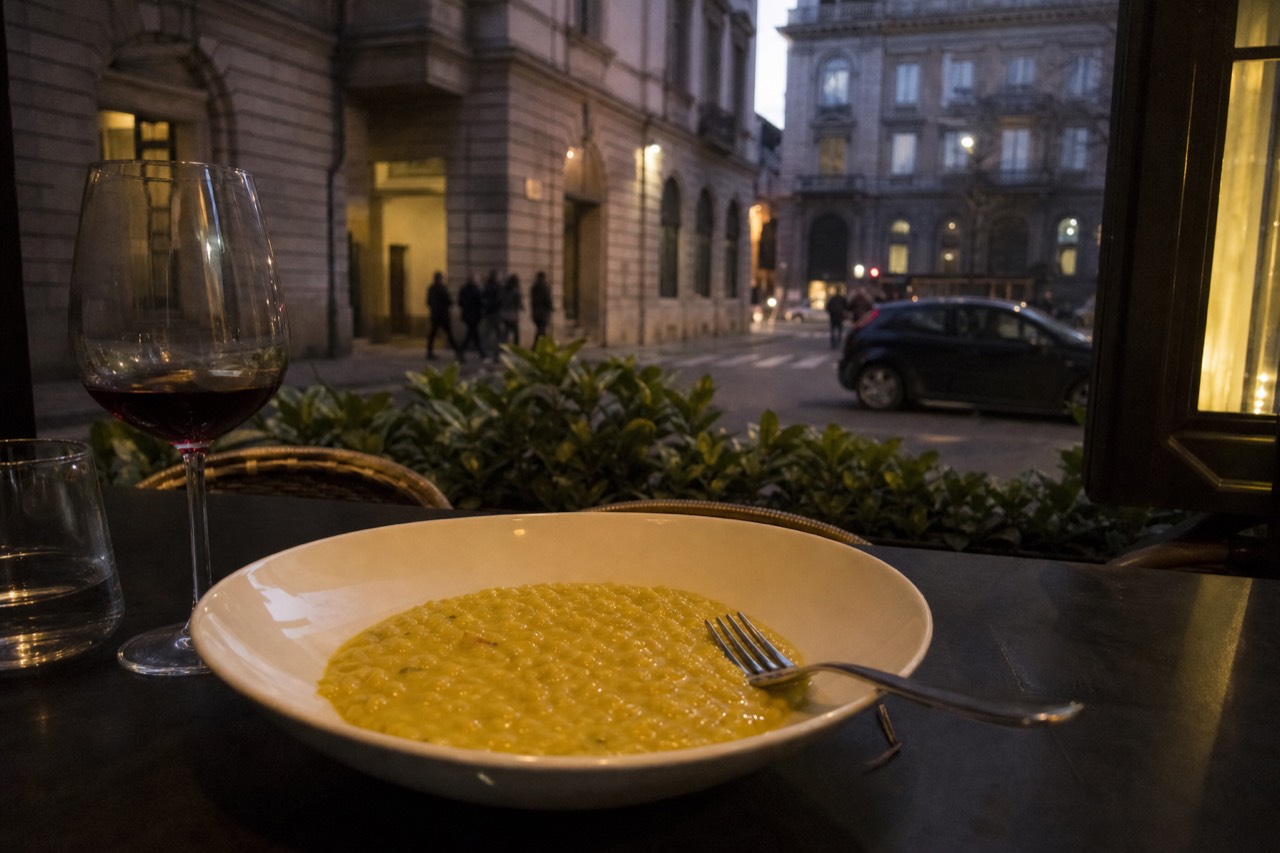
Risotto alla milanese is Milan’s saffron rice dish, served all’onda on its own or with ossobuco. Choose a tasting walk that explicitly lists saffron risotto, or a cooking experience that names the dish; a generic food or pasta tour is not enough.
Milan runs on a handful of dishes it considers its own, and none of them is defended more fiercely than risotto alla milanese. Search for it and you will get recipe after recipe: quantities of rice, threads of saffron, minutes of toasting. Useful, if you cook. Useless, if you are standing in Milan hungry and want to know which kitchen will hand you a plate worth the calories, what it should cost, and whether the yellow in front of you came from a flower or a powder.
This page answers the eating half of the question. It is not a recipe, contains no method, and will not tell you how to make this dish at home. It covers where the dish legally stands in its own city, how it is served, what it costs, and the tests that separate a saffron risotto from an imitation.
What Is Risotto Alla Milanese?
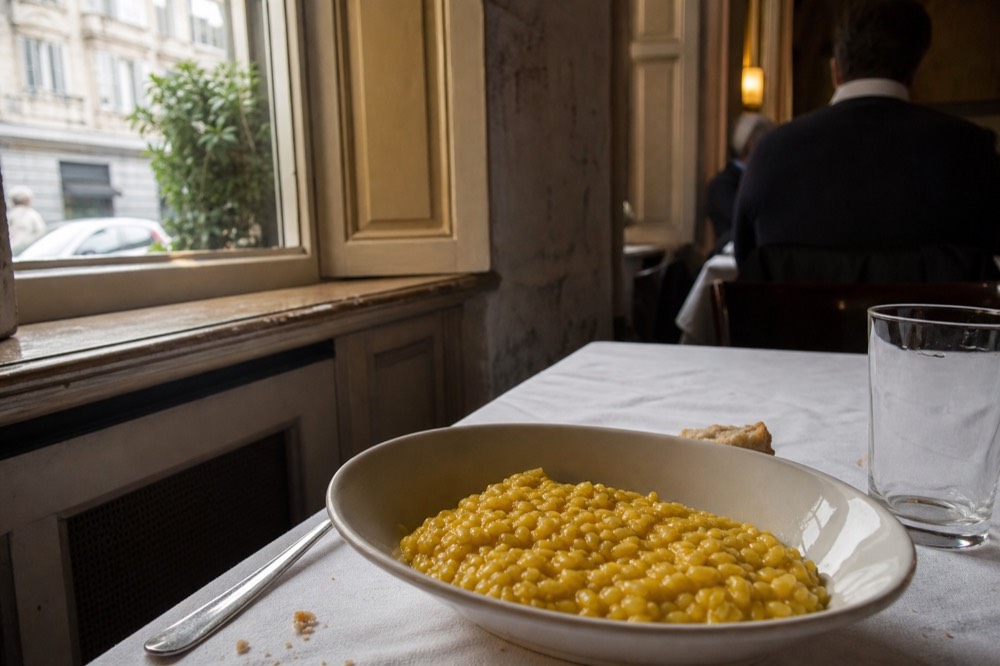
Risotto alla milanese is a slow-stirred rice dish coloured and perfumed with saffron, the signature plate of Milan, recognised on the city's own De.Co. register of traditional products since 2007. It is eaten as a first course or as a full plate, and it belongs to a small family of dishes the Comune di Milano formally claims as its own.
The De.Co. register is the interesting part, because almost nothing written about this dish gets it right. De.Co. stands for Denominazione Comunale, a municipal recognition established by the Comune di Milano through resolutions in December 2007 and 2008. The Comune describes it as "un'attestazione di appartenenza territoriale", a statement of territorial belonging. It is not a quality guarantee and it is not an EU designation. Risotto alla milanese holds no DOP, no IGP, no STG at European level, and anyone who tells you it is a "protected" dish in the legal sense is confusing the municipal register with the EU system that governs protected cheeses like Gorgonzola DOP. The Comune's food policy pages list the register, and risotto alla milanese sits on it alongside panettone, michetta, cassoeula, ossobuco and cotoletta, each with its recognition year.
That may sound like bureaucracy, but it matters to a visitor. The register is the city saying, in writing, that this dish belongs here in a way it belongs nowhere else. Piedmont makes fine risotti, the Veneto grows much of the rice, but Milan is the place where the saffron version carries a formal municipal signature. For a fuller picture of the city's traditional plates, see the companion guide on what to eat in Milan.
Why Is Risotto Alla Milanese Yellow?
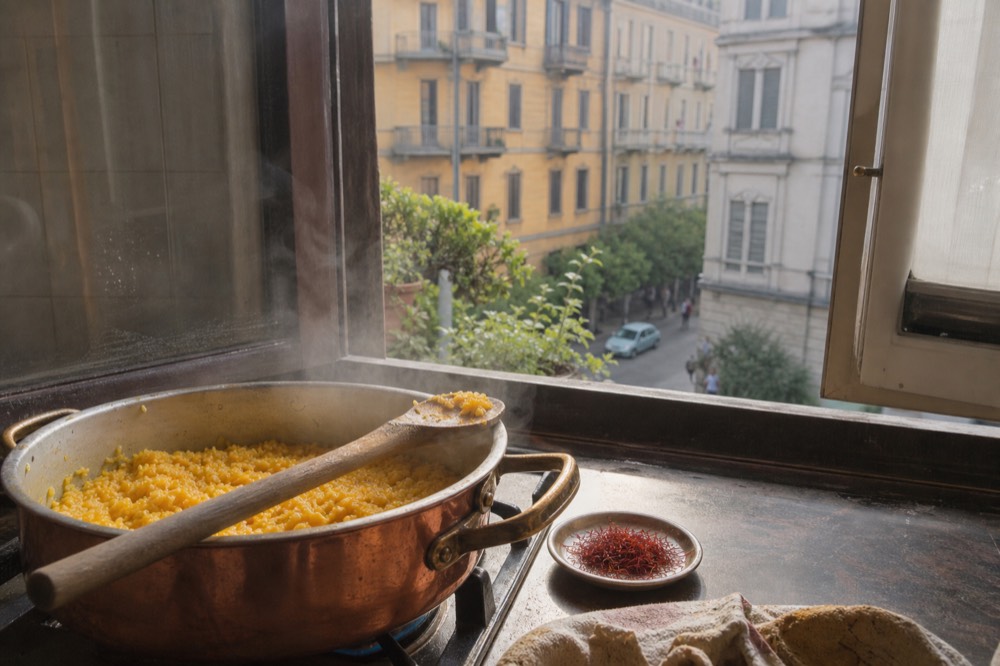
The colour comes from saffron, the dried stigmas of Crocus sativus, which release a deep gold pigment and a faintly honeyed aroma into the rice as it cooks. A properly made plate is a warm, translucent gold that varies slightly batch to batch, because saffron is an agricultural product, not a dye.
The legend attached to the dish is a good story: a glassworker, nicknamed Zafferano, supposedly tinted a rice dish at a wedding feast for the daughter of his master, either as a joke or as a tribute to the gold hues of stained glass. It is a legend, and like most food origin legends it should be enjoyed, not cited. What is documented is the dish's place in the Milanese canon and its municipal recognition in 2007, and the fact that saffron arrived in Italian kitchens through trade routes long before any Milanese glassworker got creative with it.
What the colour should not be is a flat, aggressive, highlighter yellow. That shade usually signals turmeric, a far cheaper substitute that delivers colour without saffron's aroma, and it is the single most common shortcut in tourist-heavy kitchens. There is more on spotting it below. The other thing worth knowing is that the rice itself matters: the grain used in the Milanese tradition is a short, fat rice that releases starch as it is stirred, giving the dish its characteristic wave.
The reason a tasting tour earns its place in a discussion of saffron is simple: most visitors taste their first, and often only, plate of risotto alla milanese on a walk rather than in a booked restaurant, and the quality of that first plate shapes everything they believe about the dish. The gourmet tasting walk by Do Eat Better lists saffron risotto alla Milanese in its itinerary. The separate Secret Food Tours downtown walk lists Taleggio-and-pear risotto, which is a different dish.
Where Should You Eat Risotto In Milan?
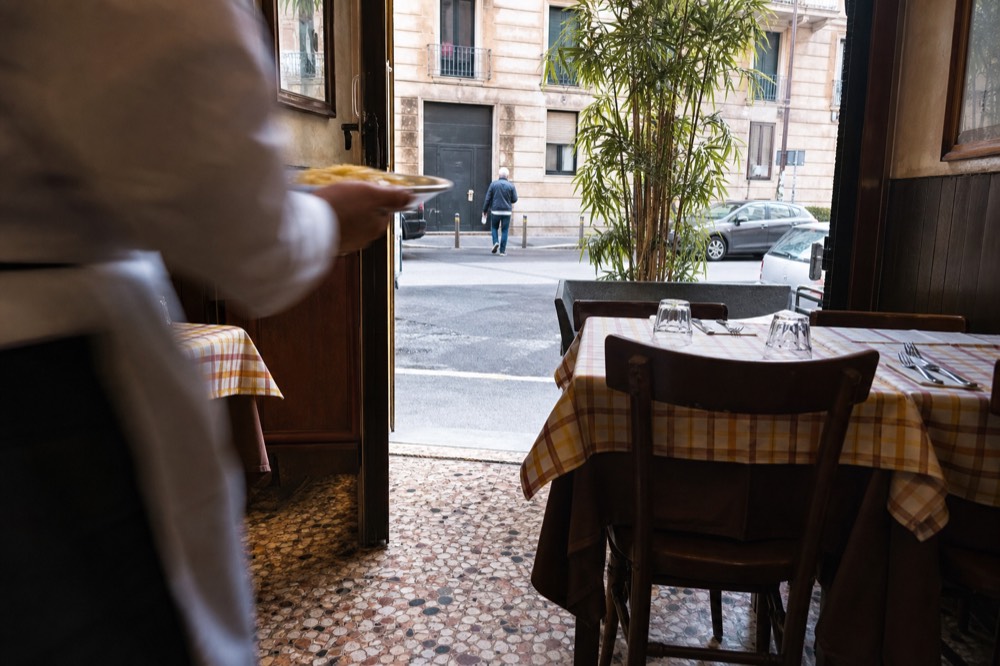
The safest plates come from kitchens that make risotto alla milanese as a standing menu item rather than a tourist speciality: traditional trattorie in the centre, the city's historic markets and food halls, and guided tasting walks whose listings name the dish. Expect the best versions at lunch, when the risotto pot is freshest.
Start with the neighbourhood logic. The areas with the deepest concentration of traditional cooking are the ones covered in the site's neighbourhood guides, particularly Brera restaurants and the Navigli restaurants guide, both of which cover kitchens where the Milanese canon is a daily affair rather than a translation on a menu. Near the cathedral, the eating near the Duomo guide covers the practical problem of finding honest food in Milan's most tourist-dense quarter, which is exactly where imitation saffron thrives.
The city's food halls are a second, underrated route. The guides to Milan food markets and Eataly Milan cover the standing options where a plate of risotto appears at a counter for less than a seated restaurant charges. The trade-off is atmosphere: a market counter serves you the dish, a trattoria serves you the ritual.
A guided walk is a third route when its itinerary names the dish. The Do Eat Better gourmet walk lists saffron risotto. To cook it, the Milanese family experience lists saffron risotto and ossobuco after a walk, aperitivo and tram ride; allow four to five hours. Check the current date and price for either experience.
| Where you eat it | Typical setting | What to expect | Watch out for |
|---|---|---|---|
| Traditional trattoria | Seated, table service, centre or Navigli | The full ritual, sometimes under ossobuco | Higher prices, tourist menus in the centre |
| Historic market or food hall | Counter, standing or shared tables | A honest plate for less, fast | Limited hours, no reservation culture |
| Guided tasting walk | On foot between stops | Risotto among several tastings, with context | Fixed route and schedule |
| Cooking class | Around a kitchen counter | You learn the dish, then eat it | Three hours of your day |
Does It Come Alone Or Under The Ossobuco?
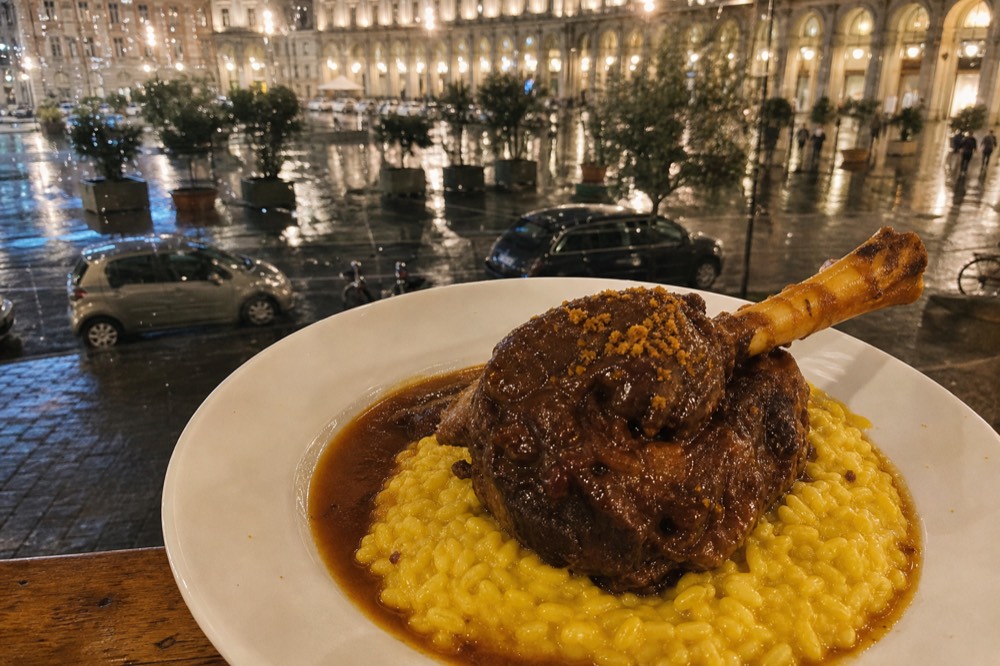
Classically, risotto alla milanese is served two ways: alone as a golden first course, all'onda, slightly rippling on the plate, or as the bed under ossobuco in glassa, braised veal shank, the pairing that turns it into a complete main. Both are legitimate; the choice is appetite, not correctness.
The ossobuco pairing is the older restaurant tradition, and it is the plate most Milanese families associate with Sunday. The rice absorbs the braising sauce, the marrow from the shank is eaten with a small spoon, and the dish becomes something greater than either half. Ossobuco holds its own 2007 De.Co. entry, so the pairing is a meeting of two registered products. When a kitchen offers risotto with ossobuco, that is usually a sign the risotto is made properly, because the kitchen cannot hide a bad risotto under a good shank.
Served alone, the plate should move. All'onda, meaning "like a wave", is the traditional texture: loose enough that the plate can be tilted and the risotto shifts, firm enough that the grain stays intact in the mouth. A risotto that stands in a stiff mound was held too long, or made ahead and reheated, and in Milan that is close to an insult. A risotto that swims was flooded at the end to fake the wave. The correct plate is between the two, and a kitchen that gets it right will have regulars who order nothing else.
What Does A Plate Of Risotto Alla Milanese Cost?
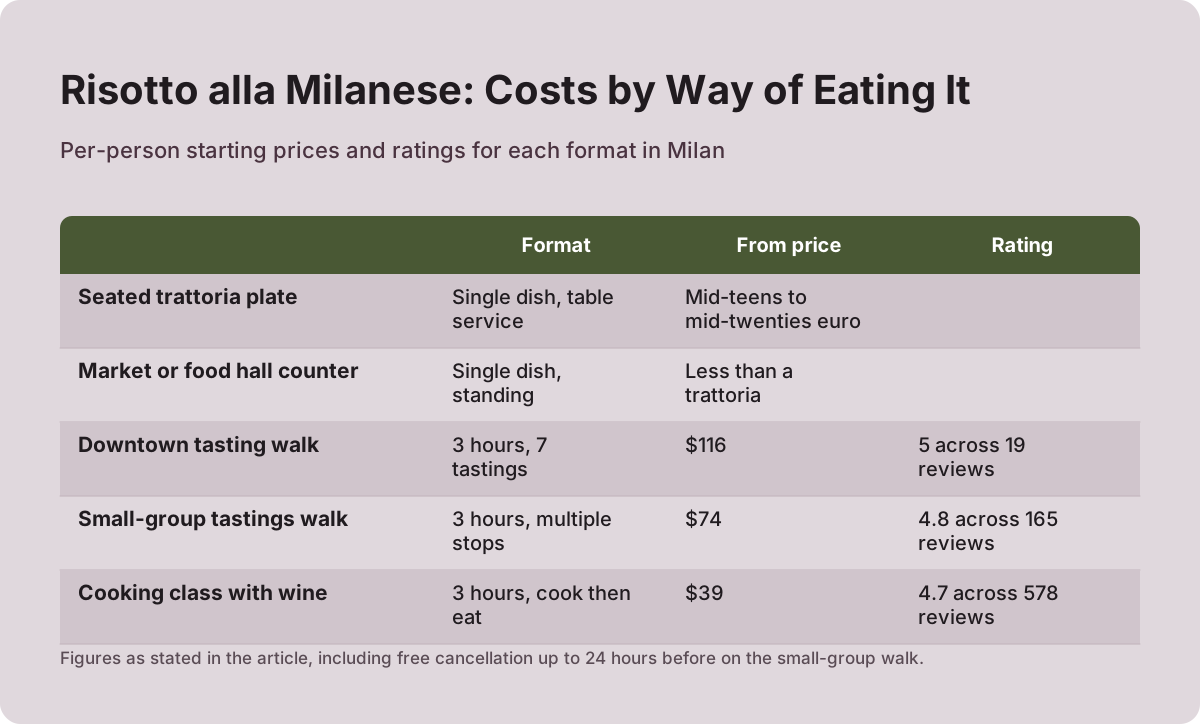
In Milan a seated plate of risotto alla milanese in a traditional trattoria typically runs in the mid-teens to mid-twenties in euro, while a market counter or food hall version costs less and a guided tasting walk charges for several tastings rather than one plate; check the current total for an itinerary that explicitly lists saffron risotto. Prices scale with postcode more than with quality.
The seated spread is real. The same plate that costs a modest sum in a neighbourhood trattoria can double inside the most touristed streets near the Duomo, without the rice being any better. The guides on where to eat in Milan and is it expensive to eat out in Milan cover the broader cost picture, but the short version for this dish: step off the main tourist arteries into districts like Navigli or Isola and the price falls faster than the quality.
The tasting-walk route prices differently because you are buying several stops, not one plate. For saffron risotto specifically, choose an itinerary that names risotto alla Milanese: the Do Eat Better gourmet walk does. The downtown Secret Food Tours walk instead lists Taleggio-and-pear risotto. For comparison, the Premium Tastings walk by Do Eat Better runs 3 hours 30 minutes from Piazza Cordusio at from $87.55 per person, rated 4.9 across 288 reviews.
| Way to eat it | Format | From price, per person | Notes |
|---|---|---|---|
| Seated trattoria plate | Single dish, table service | Mid-teens to mid-twenties euro | Higher near the Duomo |
| Market or food hall counter | Single dish, standing | Less than a trattoria | See the markets guide for venues |
| Gourmet tasting walk | Several tastings including saffron risotto | Check current date | Confirm the listed menu |
| Downtown tasting walk | Taleggio-and-pear risotto, not the saffron recipe | Check current date | A different risotto dish |
| Risotto-and-ossobuco cooking experience | 4–5 hours, walk and home cooking | Check current date | Explicitly teaches both dishes |
How Can You Tell Real Saffron Risotto From A Turmeric Imitation?
Real saffron risotto is a warm, variable gold with a faint honey-and-hay aroma and a colour that deepens unevenly through the plate; turmeric-tinted versions are a flat, aggressive yellow, smell of nothing in particular, and often taste mostly of butter and cheese. The aroma test beats the eye test every time.
Saffron is one of the most expensive spices in the world by weight, which is exactly why it gets substituted. The economics are brutal for a kitchen: a proper dose of saffron for a restaurant pot of risotto costs real money, while a spoonful of turmeric costs almost nothing and delivers more colour. The result is a plate that photographs identically and tastes like a different, sadder dish.
Three checks work at the table. First, the nose: lean in before stirring. Saffron announces itself, subtly, with something between honey and dried hay. Turmeric smells of nothing at that distance. Second, the shade: saffron gold is warm and slightly uneven, deepening where the threads infused longest; turmeric yellow is uniform and leans acid. Third, the menu: a kitchen that prints "risotto alla milanese con zafferano" and prices it like everything else on a tourist menu is a kitchen cutting the most expensive input. A kitchen that charges properly for it usually uses it properly.
For a walk, check the actual listed dish: generic "risotto" may mean a recipe other than saffron risotto alla Milanese. The gourmet walk names the saffron version in its itinerary.
When Do Milanese People Actually Eat Risotto?
Risotto alla milanese is an everyday-to-Sunday dish with no fixed season: Milanese kitchens serve it year-round, at lunch more reliably than dinner, and the ossobuco pairing peaks in the colder months when braised dishes return to the menu. There is no "risotto season" to time a trip around.
That said, the Milanese calendar does shape the plate indirectly. The city's eating rhythms, covered in detail in what time do people eat dinner in Milan, mean restaurants fill late, and a risotto pot started for the lunch service is at its best early. A practical rule: order risotto at lunch, or early in a dinner service, because a pot that has sat since noon is a plate that has lost its wave.
August deserves a word, because it is the month visitors most often get wrong. Individual Milan restaurants close for one to three weeks in August, and no aggregate figure exists for how many, so the honest advice is to check specific venues rather than assume the city is shut. The months around Christmas bring panettone, covered in the site's panettone in Milan guide, and with it the full festive canon, where the risotto and ossobuco pairing reappears on family tables.
Can You Learn The Dish Instead Of Just Eating It?
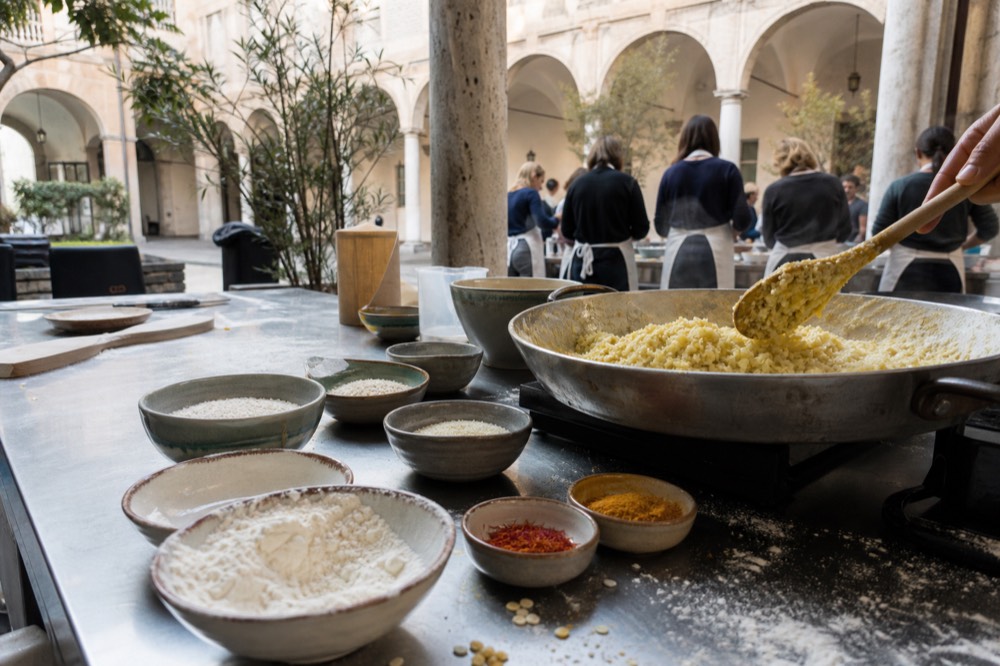
Yes. Choose a class that explicitly lists risotto rather than assuming a pasta lesson covers it. The four-to-five-hour Milanese family experience includes cooking saffron risotto and ossobuco; its hands-on format lets you practise texture under guidance.
Most of the roster’s classes focus on pasta and tiramisu. The Milanese family cooking experience explicitly lists saffron risotto and ossobuco, following a city walk, aperitivo and tram ride. Allow four to five hours. A separate seasonal-risotto class teaches rice techniques with mushroom, goat-cheese and pumpkin variations. For the full picture of formats and prices, see the site's cooking classes in Milan guide and the cost breakdown in cooking class cost in Italy.
What a class gives you that a restaurant cannot is the texture reference. You stir the pot, you feel when the wave is right, and you calibrate your tongue for every risotto you eat afterwards, in Milan or anywhere. It is the single best defence against turmeric imitations: once you have tasted the real thing made under instruction, the flat yellow versions announce themselves.
What Mistakes Do Visitors Make With Risotto Alla Milanese?
The three common mistakes are ordering it late in a dinner service when the pot has sat for hours, eating it in the most touristed streets where imitation saffron is routine, and treating it as a side dish, which it never is in Milan: it is a first course or a full plate, never an accompaniment.
The side-dish error is mostly an American habit that Milanese kitchens quietly resent. Risotto alla milanese arrives as a primo, on its own, or as the base under ossobuco. Ordering it next to a second meat course is asking for a lot of food, and some kitchens will assume you are sharing. The ordering-late error is about physics: the dish does not hold. The all'onda texture lives for minutes, and a pot held from lunch to 21:00 is a different product.
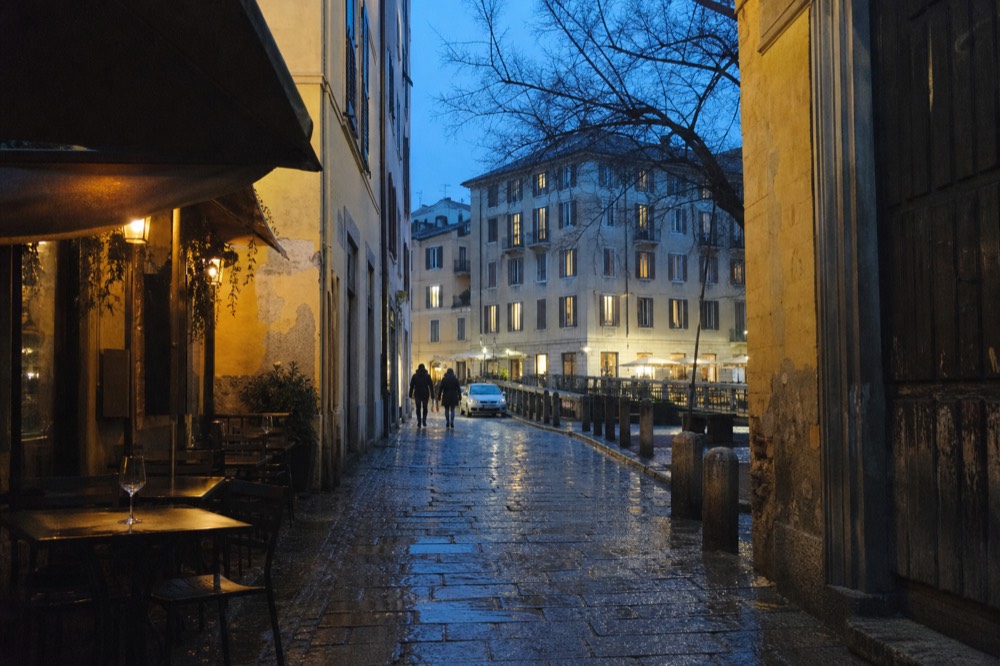
The location error is the expensive one. The streets immediately around the Duomo and the Galleria concentrate the kitchens with the most incentive to substitute saffron, because their customers arrive once and never return. Walk into Brera's side streets, across to Navigli, or up to a market hall, and the economics flip: those kitchens cook for people who come back. The site's neighbourhood guides, including Milan street food for the counter-and-culture angle, map the areas where the canon is cooked rather than performed.
| Mistake | Why it happens | What to do instead |
|---|---|---|
| Ordering risotto at 21:30 | Dinner hours run late in Milan | Order at lunch or early in dinner service |
| Eating it in the most touristed streets | Convenience, proximity to the Duomo | Head into Brera, Navigli or a market |
| Treating it as a side dish | Habit from other cuisines | Order it as your first course, or with ossobuco |
| Judging by colour alone | Turmeric imitates the gold | Smell first: saffron reads as honey and hay |
| Assuming August is fine | No aggregate closure data exists | Check specific venues before you go |
The through-line of this guide is that risotto alla milanese rewards a small amount of knowledge. The dish itself is simple, the legal recognition is municipal and modest, and the difference between a great plate and a bad one comes down to saffron, timing and postcode. A visitor who smells before stirring, orders at lunch and walks ten minutes off the main drag will eat better than most locals' tourists, and on Milan Food Tours that is the standard we write to.
These are the questions visitors ask most about risotto alla milanese, answered in brief: what the dish is, why it is yellow, whether it is legally protected, what a plate costs, how to spot real saffron, and whether it should arrive under ossobuco. Each answer below restates the essentials from the guide.
Common Questions About Risotto Alla Milanese
What Is Risotto Alla Milanese?
A slow-stirred rice dish coloured and perfumed with saffron, the signature plate of Milan, recognised on the city's De.Co. register since 2007. It is served as a golden first course or under braised ossobuco, and it is never a side dish.
Why Is Risotto Alla Milanese Yellow?
Because of saffron, the dried stigmas of Crocus sativus, which release a warm gold pigment and a honeyed aroma as the rice cooks. A flat, aggressive yellow usually indicates cheaper turmeric instead.
Is Risotto Alla Milanese A Protected Dish?
Not in the EU sense. It holds De.Co. status, a municipal recognition the Comune di Milano describes as a statement of territorial belonging, granted in 2007. It has no DOP, IGP or STG designation.
How Much Does A Plate Of Risotto Alla Milanese Cost In Milan?
In a traditional trattoria, typically mid-teens to mid-twenties in euro, with prices rising near the Duomo. A guided tasting walk charges for a package of stops; check current prices and confirm that its menu explicitly includes saffron risotto.
How Can I Tell If A Restaurant Used Real Saffron?
Smell the plate before stirring: saffron gives a faint honey-and-hay aroma. The colour should be a warm, slightly uneven gold rather than a flat acid yellow, and heavily touristed menus priced uniformly are the likeliest place for substitution.
Should Risotto Alla Milanese Come With Ossobuco?
Both servings are traditional. Alone, it is a first course served all'onda, slightly rippling on the plate. Under ossobuco in glassa, braised veal shank, it becomes the classic Milanese main.
Milan Gourmet Tour: A Premium Tasting Experience By Do Eat Better
Have your travel date in mind? Check the selected experience before arranging the rest of your Milan food day.
3 hours 30 minutes · English · Meet your guide for the Do Eat Better Experience Milan Food Tour in front of 'Banca Intesa'
Scheduled departure dates. Availability and final price are confirmed on Viator.
None of these experiences matches that choice. Adjust your preference or reset to the general recommendation.
Compare Options And Plan Your Visit
- Taste saffron risotto on the gourmet walk
- Taste saffron risotto alla Milanese among the walk’s included dishes.
- Cook saffron risotto and ossobuco
- Cook saffron risotto and ossobuco after a city walk, aperitivo and tram ride; allow four to five hours.
- Learn seasonal risotto techniques
- Learn seasonal risotto techniques in a four-hour class; the menu varies from the saffron recipe.
- A local Milanese food walk
- Try saffron risotto as part of a broader Milanese food walk.
Before Booking
Moderate physical fitness Minimum drinking age 18 Not suitable for severe or life-threatening food allergies Tastings vary by season and availability
Compare complete party totals in the same currency, including any transport, meals or extras you would otherwise buy.