What Are Some Famous Trattorias In Italy?
A definition-first guide to Italy's trattorias: how they differ from osterias and ristorantes, the Milanese rooms that earn a national mention, and the bookable home-kitchen alternative.
What Are Some Famous Trattorias In Italy?
The honest answer is that Italy's most famous trattorias are rarely the ones with the famous names: a trattoria is a family-run neighbourhood dining room serving a short menu of local home cooking, and the category's best-known examples are places like Milan's historic osterias and the Cesarine home-dining network rather than starred restaurants. Most lists you will find online quietly swap in ristorantes, because those are the rooms with press offices. This guide takes the opposite approach: it defines the category properly, then names only the Milanese rooms that verifiable sources support, and shows you the one trattoria-style kitchen you can actually book tonight.
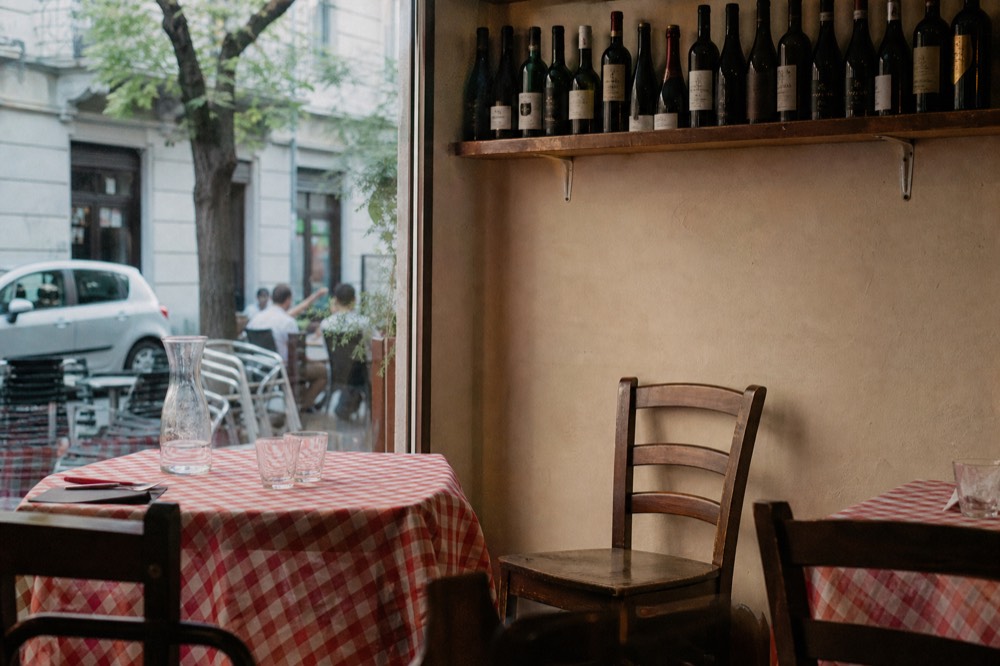
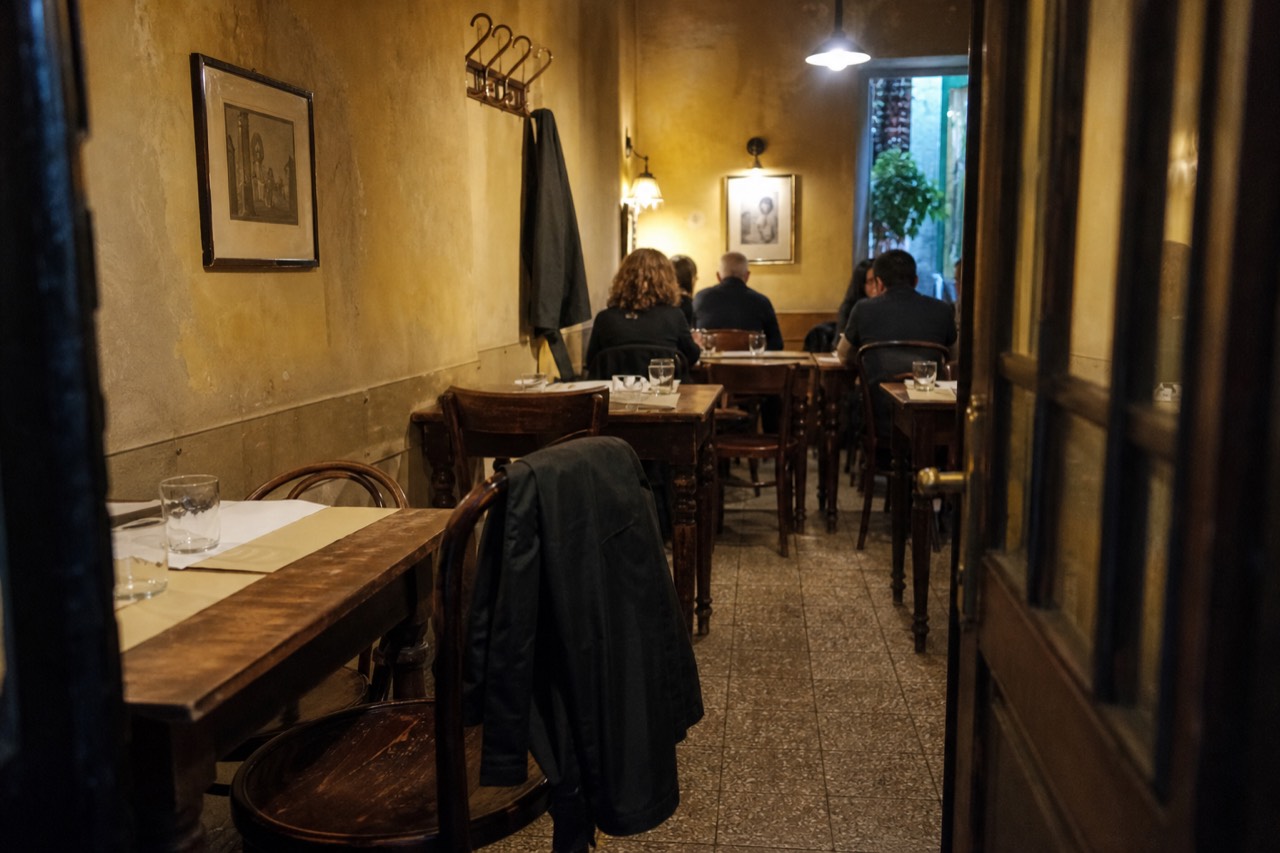
The word itself does some work. A trattoria is historically a place where the food is "treated", from the Italian trattare: simple, generous, cooked by the family that owns the room, priced for the neighbourhood rather than the guidebook. The menu is short because it changes with the market. The service is quick because the same people who cook also carry the plates. None of that is marketing language; it is the operating model.
The confusion starts when rankings get involved. The Michelin Guide Italy 2026, presented in Parma in November 2025, gave Milan 20 starred restaurants, including the three-star Enrico Bartolini al MUDEC and new one-stars Procaccini and Abba, as Michelin's own ceremony report records. Every one of those is a ristorante. Gambero Rosso's 2026 Tre Forchette list for Milan names Cracco in Galleria, Seta by Antonio Guida and Il Luogo Aimo e Nadia, all fine dining rooms. Not a trattoria among them, and that is the point: the two hierarchies measure different things.
There is a second reason the famous-name lists disappoint. The trattoria is a neighbourhood format, and neighbourhoods change faster than reputations do. A room can be beloved for a century and still close, as Milan learned twice in a single year, and a room nobody has written about yet can be cooking better than the one on every postcard. The format rewards the traveller who reads the menu in the window rather than the review on the phone.
If what you want is the trattoria experience, cooked food in a room that feels like somebody's home, the rest of this article is for you. And if you want the closest thing to a family trattoria kitchen that is actually bookable, the Cesarine network puts you at a real host's table.
What Is The Difference Between A Trattoria, An Osteria And A Ristorante?
A trattoria is a family-run restaurant with a short, local, home-style menu and modest prices; an osteria historically served wine with simple food and now overlaps heavily with the trattoria; and a ristorante is a formal restaurant with an extensive menu, professional service and the highest prices of the three. The boundaries blur in practice, and modern marketing has stretched all three words, but the underlying differences in format, price and expectation hold up across Italy.
| Trattoria | Osteria | Ristorante | |
|---|---|---|---|
| Format | Family-run dining room, short daily menu | Historically a wine house, now small plates or a full simple menu | Formal dining room, extensive printed menu |
| Service | Informal, often the family itself | Informal, counter or table | Professional, coursed service |
| Prices | Moderate, neighbourhood-level | Moderate, sometimes cheaper with standing service | Highest of the three |
| What to expect | Local home cooking, no ceremony | Wine-led, food to accompany it | Technique, presentation, wine lists |
The osteria is the slipperiest of the three. In Milan the word has been reclaimed by contemporary openings: Formentini, a contemporary osteria, opened on Via Formentini in Brera in early 2026, and it sits closer to the ristorante end of the table above than to a wine counter. That drift is normal and worth knowing about, because a name on a sign tells you less than the menu does. The same stretch has happened to the word trattoria itself, which is why this article leans on verifiable formats, real kitchens and the city's own dish register rather than on signage.
One practical note that belongs here and nowhere else in this article: the coperto, the cover charge for bread and table setting, is still legal in Italy provided it is clearly listed on the menu, and it typically runs EUR 1-3 per person. It is not a scam. It is on the printed page, and a trattoria will charge it just like a ristorante will.
Which Milanese Rooms Belong On A National Trattoria List?
Milan's strongest trattoria-style credentials in 2026 are Formentini in Brera, the Bistrot Pedol fish counter inside the 1929 Mercato Comunale Wagner, the botteghe of Mercato Centrale, and the Cesarine home-dining network, which is the purest surviving version of the format: a real family kitchen, booked in advance, address disclosed after booking. Each of those is documented in current sources, and each still cooks or serves the old Milanese repertoire rather than a tourist version of it.
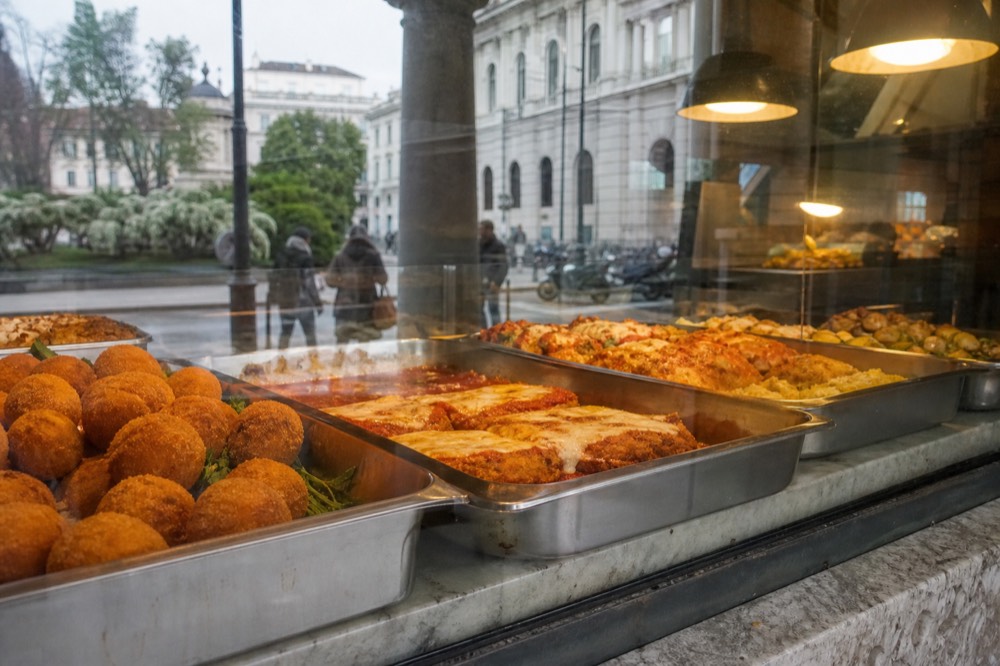
Start with the market rooms, because that is where Milan's trattoria culture physically lives. The Mercato Comunale Wagner, opened in 1929 and the city's oldest covered market, holds more than nineteen vendors, and its long-standing fish counter Pescheria Pedol expanded into Bistrot Pedol in May 2025. Eating inside a working covered market is the most honest version of trattoria dining a city can offer: the menu is whatever came in that morning. The market also runs community projects, including a 2025 neighbourhood-alliance crowdfunding scheme for deliveries and local partnerships, which tells you the room is woven into its district rather than performing for visitors.
Mercato Centrale, inside Milano Centrale station, works differently: roughly 4,500 square metres of botteghe, open daily 6:30 to 23:00, where you order at the counter and sit where you like. It is a food hall rather than a trattoria, but several of its counters cook family recipes, and it survived a difficult 2026: a February inspection suspended 17 of its 27 activities over an infestation, and the hall closed for extraordinary cleaning before reopening progressively. A venue that transparent about its own hard year is worth more trust than one with a flawless press kit.
The Cesarine network deserves its own paragraph, because it solves the problem this whole article circles. Cesarine requires its home hosts to hold HACCP certification and food-handler training, and membership runs EUR 35-70 a year after the first, per the network's own host recruitment page. What that means for you is a vetted family kitchen rather than a commercial restaurant wearing the word "trattoria" as a costume. The Milan Food Tours roster includes their UNESCO Heritage pasta and tiramisu class: about three hours, from $128 per person, rated 4.9 across 136 reviews, with free cancellation up to 24 hours. It publishes no meeting point because the host's address is sent after booking, which is exactly what you should expect from a real home.
What Does A Milanese Trattoria Still Cook The Old Way?
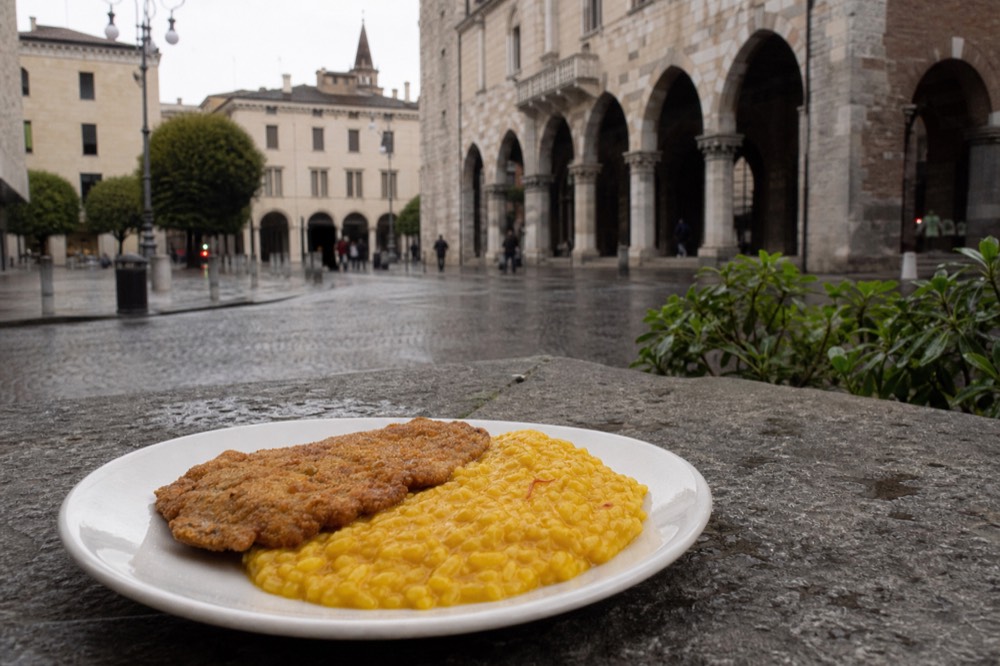
The old Milanese repertoire is codified in the city's own De.Co. register: risotto alla milanese, cotoletta, cassoeula, ossobuco, mondeghili, michetta and panettone all hold municipal denominations, and a proper trattoria will be cooking several of them on any given day. De.Co. is a Comune di Milano recognition, a statement of territorial belonging established by council resolutions in 2007 and 2008, and it is not the same thing as EU protection. No Milanese dish holds a DOP or IGP. That distinction matters, because a lot of copy online gets it wrong.
| Dish | De.Co. year | What it is |
|---|---|---|
| Risotto alla milanese | 2007 | Saffron rice, the city's signature plate |
| Cotoletta alla milanese | 2008 | Breaded veal cutlet, fried in butter |
| Cassoeula | 2007 | Winter pork and cabbage stew |
| Ossibuchi | 2007 | Braised veal shank, classically with risotto |
| Mondeghili | 2008 | Fried meatballs, a leftover-cooking tradition |
| Michetta | 2007 | The city's characteristic empty bread roll |
| Panettone | 2007 | Naturally leavened Christmas cake |
| Pan de Mej | 2026 | Cornmeal cake tied to the feast of San Giorgio, 23 April |
The full register, maintained under the Comune's food policy programme, is on the city's own food policy pages. The 2026 addition of Pan de Mej is the freshest entry, and it is a genuinely useful one for visitors: it gives you a fixed date, 23 April, on which a trattoria or pasticceria worth the name will have the cake. It is also the kind of detail that separates a real trattoria from a themed one, because a kitchen that tracks the feast calendar is a kitchen still connected to the city's rhythm.
Panettone deserves a caution. It is legally defined by an Italian ministerial decree of 22 July 2005, which reserves the name to a naturally leavened sourdough product with minimum 16% butter, 4% yolk and 20% raisins and candied citrus. It is a Christmas product, and in the 2025 season the analysis firm Resmart, reported by Food Affairs, put artisan panettone in Milan above EUR 50 per kilo, naming Marchesi and Gattullo at EUR 50 per kilo. If a trattoria hands you panettone in July, it is not the seasonal product the decree describes.
How Do You Actually Book A Trattoria Experience In Milan?
You book a Cesarine home class or dinner, because the genuine family trattoria kitchen is not a bookable commercial product any other way: the Cesarine network's hosts are vetted home cooks, and in Milan the roster offers both a pasta and tiramisu class and a natural food and wine home dinner. The first runs about three hours from $128 per person, rated 4.9 across 136 reviews, with free cancellation up to 24 hours. The second is a two-hour dinner from $94.65 per person with 10 reviews, too few for a rating claim, and it is the only non-refundable product on the roster, so check your dates before committing.
The pasta class is the one to pick if you want technique. You work alongside the host, in her own kitchen, on fresh pasta and tiramisu, with a Prosecco aperitivo to start. The reviews, 136 of them at 4.9, describe exactly what a good trattoria meal feels like: food cooked in front of you by the person who owns the room. The natural food and wine dinner is quieter and more of a gamble, with its small review count, but it is the deepest version of the format, a meal in a Milanese home with natural wine, on Via Valparaiso.
For contrast, consider the premium tasting walk. Do Eat Better's gourmet tour, from $87.55 per person and rated 4.9 across 288 reviews, visits several stops over three and a half hours from Piazza Cordusio. It is not a trattoria experience, it is a walk, but it shows you the city's food at the source before you sit down in anybody's dining room. Some travellers do the walk on their first evening and the class on their second.
What Should A Trattoria Meal Cost, And What Should You Skip?
A trattoria meal in Milan should cost less than a ristorante meal at every course: the reference points that can be verified are a EUR 2.20 metro ticket to reach any neighbourhood trattoria, a coperto of EUR 1-3 per person, and spritz prices that run from EUR 3.50 at a neighbourhood bar to EUR 21 on the Duomo terrace, a spread that tells you everything about location pricing. The Aperol Spritz Index 2026 put Milan's average at EUR 16.66, which reflects the centre, not the trattoria end of town.
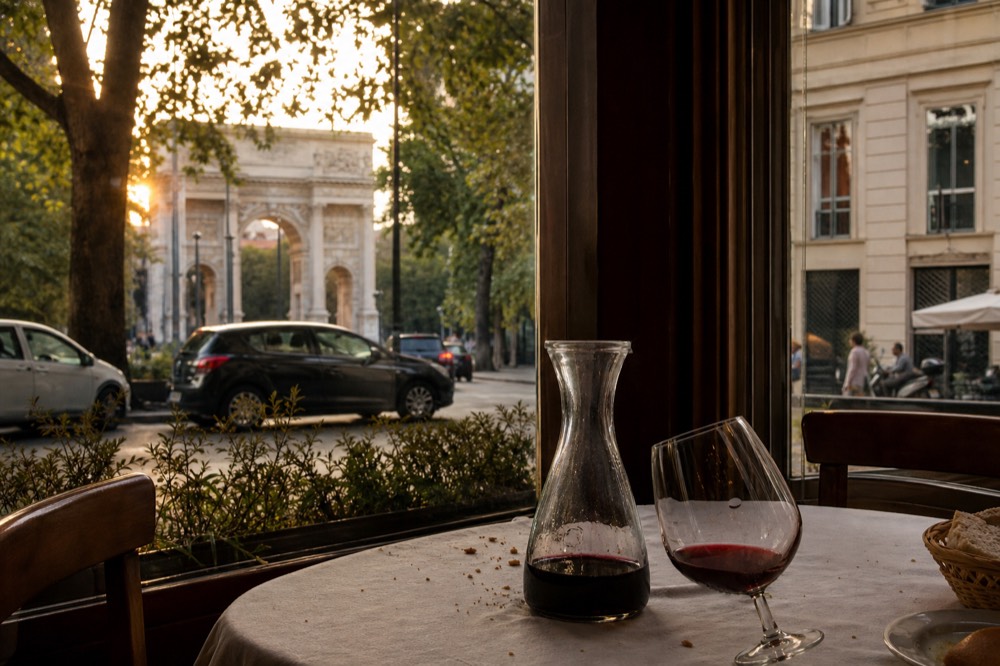
The planning logic is straightforward. Eat where the residents eat, order the De.Co. dishes the kitchen has cooked forever, and treat any room with photographs of celebrities on the wall as a warning rather than a recommendation. Milan's neighbourhoods are in constant turnover: the fish trattoria Polpo closed in December 2025, and Antica Pizzeria Da Giulio on Corso San Gottardo closed in May 2026 after 101 years, proof that even beloved old rooms do not survive on sentiment alone. Meanwhile Porta Romana and Porta Venezia keep filling with independent trattorias and wine bars, which is where the value has moved.
Getting to any of these rooms is cheap. A single ATM ticket costs EUR 2.20 and is valid for 90 minutes across metro, tram and bus, and a 24-hour ticket costs EUR 7.60, so the neighbourhood trattoria two districts away costs less to reach than the water you will order with dinner. There is no reason to eat in the tourist core when the same dishes are cooked better a few stops down the line.
If you are building a whole eating itinerary around this, the companion pieces on this site go deeper: what to eat in Milan covers the full dish canon, and hidden gem restaurants in Milan tracks the rooms below the radar. For the trattoria question specifically, the Cesarine class below remains the most direct answer: a family kitchen, a short menu, and food cooked by the people who own the room.
The short answers: judge a room by its menu rather than its sign, expect trattoria prices to sit below ristorante prices at every course, remember that the osteria and trattoria formats now overlap almost completely, and know that the Cesarine network is the one way to book a genuine family kitchen in Milan, with the De.Co. register as your ordering guide once you are seated. The details behind each of those points are below.
Common Questions About Trattorias In Italy
What Are Some Famous Trattorias In Italy?
The category's best-known examples are family-run neighbourhood rooms rather than starred restaurants. In Milan, the verifiable names are Formentini in Brera, the Bistrot Pedol counter in the Wagner market, the botteghe of Mercato Centrale, and the Cesarine home-dining network, whose hosts cook the same repertoire in their own kitchens. National "famous trattoria" lists usually smuggle in ristorantes, so judge a room by its menu, not its title.
Is A Trattoria Cheaper Than A Ristorante?
Yes, as a rule. A trattoria runs on a short menu of local home cooking with neighbourhood-level prices, while a ristorante carries an extensive menu, professional service and the highest prices of the three formats. Both will charge a coperto, typically EUR 1-3 per person, if it is listed on the menu.
What Is The Difference Between A Trattoria And An Osteria?
Historically an osteria served wine, with simple food to accompany it, while a trattoria was a family dining room serving a full home-style menu. Today the two overlap heavily in Italy, and in Milan the word osteria has even been adopted by contemporary openings like Formentini in Brera. The menu tells you more than the sign does.
Can You Book A Real Family Trattoria Kitchen In Milan?
Yes, through the Cesarine network. Its Milan classes and dinners take place in vetted hosts' homes, with HACCP-certified cooks, and the host address is sent only after booking. The UNESCO Heritage pasta and tiramisu class runs about three hours from $128 per person and is rated 4.9 across 136 reviews.
What Dishes Should I Order In A Milanese Trattoria?
Order from the city's De.Co. register: risotto alla milanese, cotoletta alla milanese, cassoeula in winter, ossobuco, mondeghili and michetta bread. Panettone is a Christmas product, legally defined by a 2005 decree, so expect it in season rather than year-round.
Natural Food & Wine In Milanese Home - Eat With Locals!
Have your travel date in mind? Check the hosted Milanese dinner before arranging the rest of your Milan food itinerary.
2 hours · en, it, ja · Contact us and we will give you the exact address! Metro stop Sant'Agostino is a 4 min walk from our home.
Scheduled departure dates. Availability and final price are confirmed on Viator.
None of these experiences matches that choice. Adjust your preference or reset to the general recommendation.
Compare Options And Plan Your Visit
- Share a home dinner
- Home dining with natural wine.
- Cook pasta and tiramisu
- Host-led home cooking with meal.
- Shop a market and cook
- Market and home-class combination.
Before Booking
Check cancellation terms and specific dietary needs before booking
Compare complete party totals in the same currency, including any transport, meals or extras you would otherwise buy.