What Is A Typical Lunch In Italy?
The Italian lunch is not one thing: in Milan the pausa pranzo is fast, cheap and structured, while the long southern Sunday table is a different tradition. Here is how each format works, what it costs and where to eat it.
What Is A Typical Lunch In Italy?
What Is A Typical Lunch In Italy?
A typical Italian lunch is a structured midday meal built around a primo of pasta, rice or soup, a secondo of meat or fish with a contorno, and bread and coffee, eaten between roughly 12:30 and 14:30. That structure is national. The timing, the pace and the price are not: in Milan the same meal is compressed into a fast working pause, while the two-hour version people picture is mostly a weekend and southern affair.
The first thing to understand is that Italy runs on two lunch cultures at once. The classic full lunch, primo, secondo, contorno, fruit or dolce, espresso, still exists everywhere, and on Sundays and holidays it still takes two hours. But on an ordinary weekday the country splits. In much of the south and in smaller towns, shops still close at 13:00 and families go home to eat. In Milan, Turin and the other northern business cities, the pausa pranzo is a tight, mobile, often standing operation, and the city does not stop for it.
Milan is the extreme case. The Comune recorded 9,662,326 arrivals across the city in 2025, and a large share of the people feeding that machine are office workers in Garibaldi, CityLife and Porta Nuova with 60 to 90 minutes in the middle of the day. The city's food infrastructure, the bar with the hot counter, the tavola calda, the food hall, the menu del giorno trattoria, is engineered around exactly that window. If you arrive expecting the long lunch, you will be surprised by how fast Milan moves at 13:00; if you arrive expecting nothing but fast food, you will be surprised by how good the fast version is.
For visitors, the practical version of this is a lunch-focused tasting walk. The Small-Group Tastings Walk by NO DIET CLUB strings the classics together over 3 hours from $74 per person, rated 4.8 across 165 reviews, and the Food Walk With City Sightseeing by Tours of Milan covers similar ground in 2 hours 30 minutes from $49.69 per person, rated 4.6 across 26 reviews.
How Does The Pausa Pranzo Work In Milan?
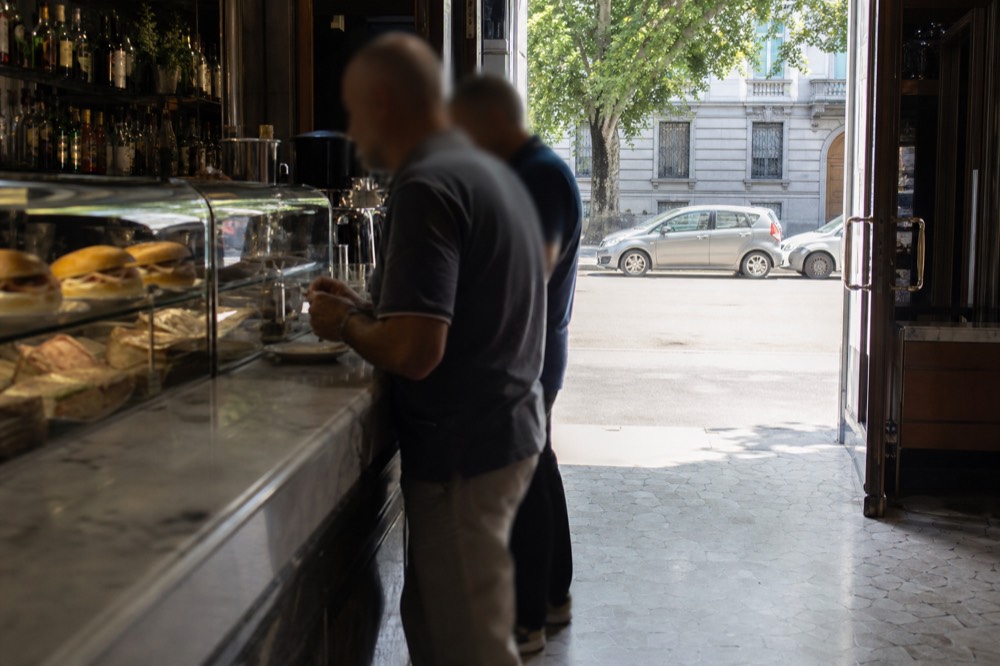
The pausa pranzo is Milan's contractual lunch break: most office contracts allow between 60 and 90 minutes, usually taken between 12:30 and 14:00, and workers spend it in bars, tavole calde, company canteens and food halls rather than at home. Nobody goes back to the family table on a Tuesday. The break is short, the eating is efficient, and the espresso at the end is drunk standing at the counter in under a minute.
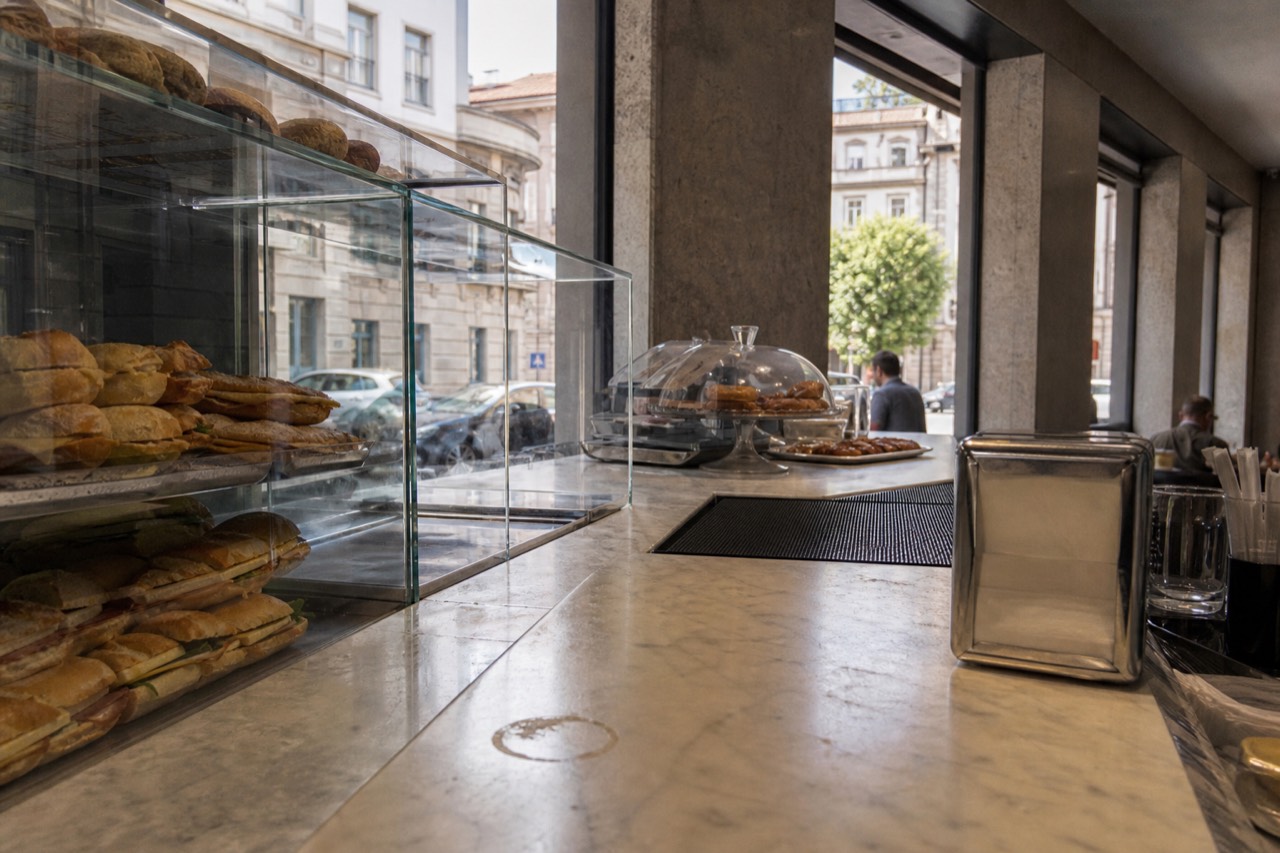
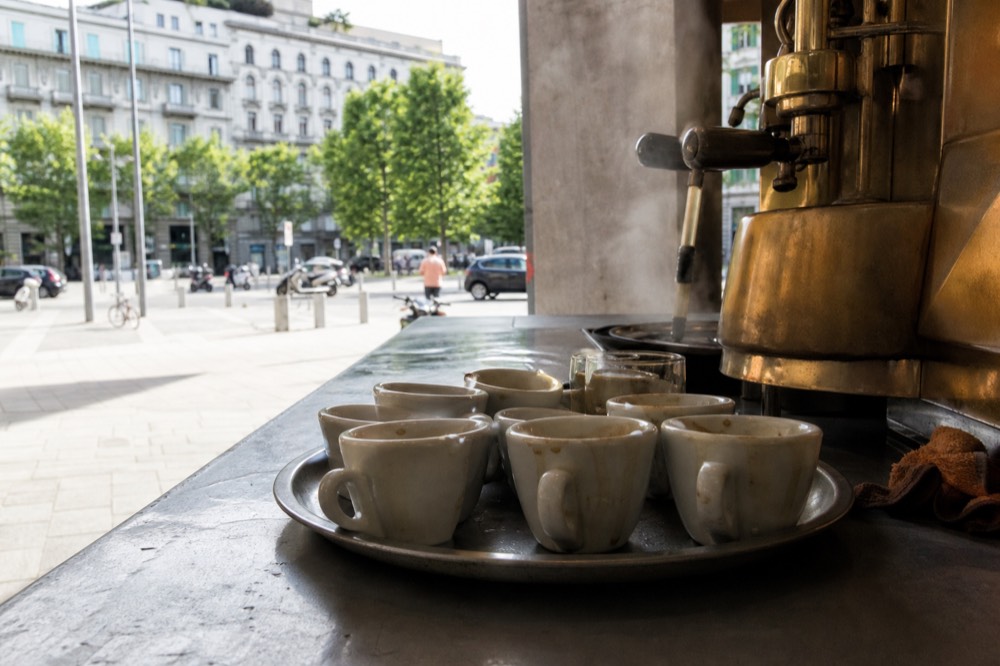
The mechanics matter for a visitor because they shape where you can and cannot eat at midday. The bar is the workhorse. A Milanese bar at 13:00 is not a café in the northern European sense; it is a hot-food operation with panini on a griddle, a display of ready dishes, and a crowd of people eating upright at the marble. You order at the register, pay, take your receipt to the counter, and eat. Sitting at a table in the same bar can cost a supplement, which is legal if listed, and it is the single fastest way to spot a tourist.
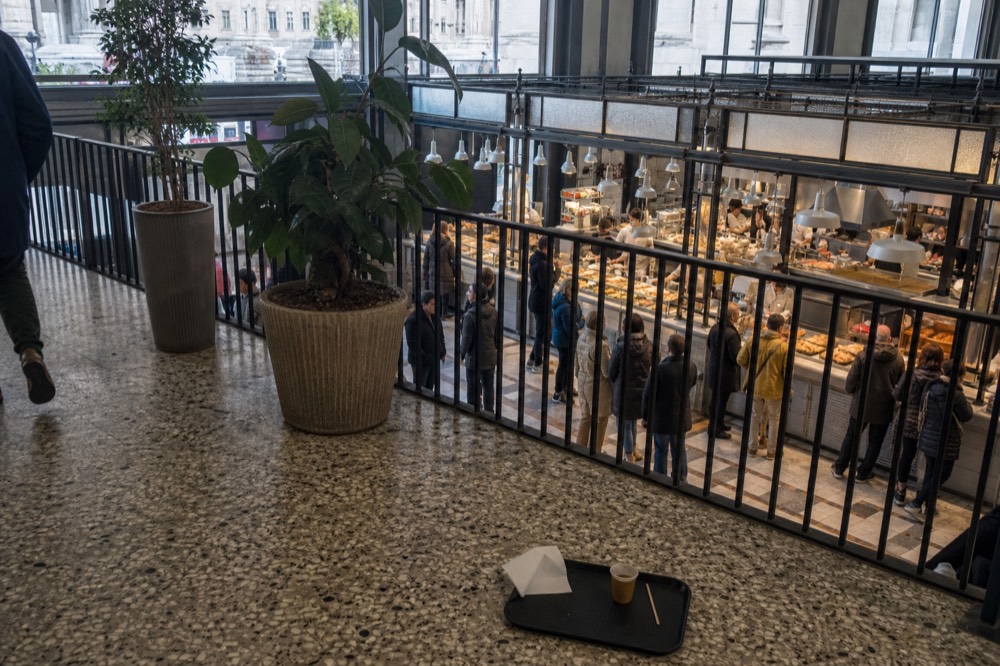
The second format is the menu del giorno, the fixed-price lunch menu. Trattorias that are expensive at dinner turn into a different business at noon: a printed sheet with two or three choices of primo, two or three of secondo, water and coffee, served fast because the kitchen knows the whole room has to be back at a desk by 14:00. The third format is newer and distinctly Milanese: the food hall. Mercato Centrale, inside Milano Centrale station at Via Sammartini, is open every day from 06:30 to 23:00, and Eataly Smeraldo at Piazza XXV Aprile is open 08:00 to 23:00, both publishing those hours on their own sites. Both are at their absolute peak between 12:30 and 14:00, when the surrounding office districts empty into them.
One caution worth carrying: the food-hall lunch is not a sanitized experience, it is a real one, and real venues have real problems. In February 2026 an ATS inspection at Mercato Centrale found infestanti and 17 of the 27 activities were suspended while the site closed for extraordinary cleaning and reopened progressively. The venue's own info page still lists daily 06:30 to 23:00 service. The lesson is not to avoid food halls, it is to check what is actually open the week you visit, because the vendor line-up moves.
What Does Each Lunch Format Cost And How Long Does It Take?
Format decides both price and clock time in Milan. A standing panino and coffee at a bar is the fastest and cheapest end, the menu del giorno sits in the middle, a food-hall plate gives you choice at food-hall prices, and a guided tasting walk is the longest and most expensive version, from $49.69 to $87.55 per person for the three Milan walks that fit the format.
The honest way to present this is a table, with the caveat that bar and trattoria prices move with the neighbourhood and you should treat any single figure as a snapshot, not a rule. Where a figure below is a tour price, it is the operator's from-price per person. Where it is a venue's own published hours, it is the venue's own number.
| Format | Where you find it | How long | What you can verify |
|---|---|---|---|
| Standing panino or piadina at a bar | Every bar in the city, office districts especially | 10-20 minutes | Price varies by bar; check the register before ordering |
| Tavola calda plate | Self-service hot counters, market halls | 20-30 minutes | Mercato Centrale open daily 06:30-23:00 |
| Menu del giorno | Trattorias at noon, business districts | 45-75 minutes | Menu printed daily; price on the sheet |
| Food-hall plate | Eataly Smeraldo, Mercato Centrale | 30-60 minutes | Eataly Smeraldo open 08:00-23:00 daily |
| Guided lunch-hours tasting walk | City centre, Navigli approaches | 2-3.5 hours | Small-Group Tastings Walk from $74, 4.8 across 165 reviews |
The guided walk deserves a word of explanation, because it is not a lunch substitute, it is a lunch replacement with commentary. The Small-Group Tastings Walk by NO DIET CLUB, 3 hours from $74 per person, rated 4.8 across 165 reviews, meets in front of Ammu and moves through a series of stops that map closely onto what a Milanese worker would eat if the worker had three hours and a local explaining every bite. Free cancellation runs up to 24 hours, which matters if your own lunch plans shift.
The same logic applies at the premium end. The Premium Tastings, Do Eat Better tour runs 3 hours 30 minutes from $87.55 per person, rated 4.9 across 288 reviews, and its listing shows 5 or more bookings in the past week. It is the version of the Milanese lunch where someone else has done the curation, and the price is roughly what you would pay assembling the same stops yourself with a guide's knowledge you do not have.
What Do Milanese People Actually Eat At Lunchtime?
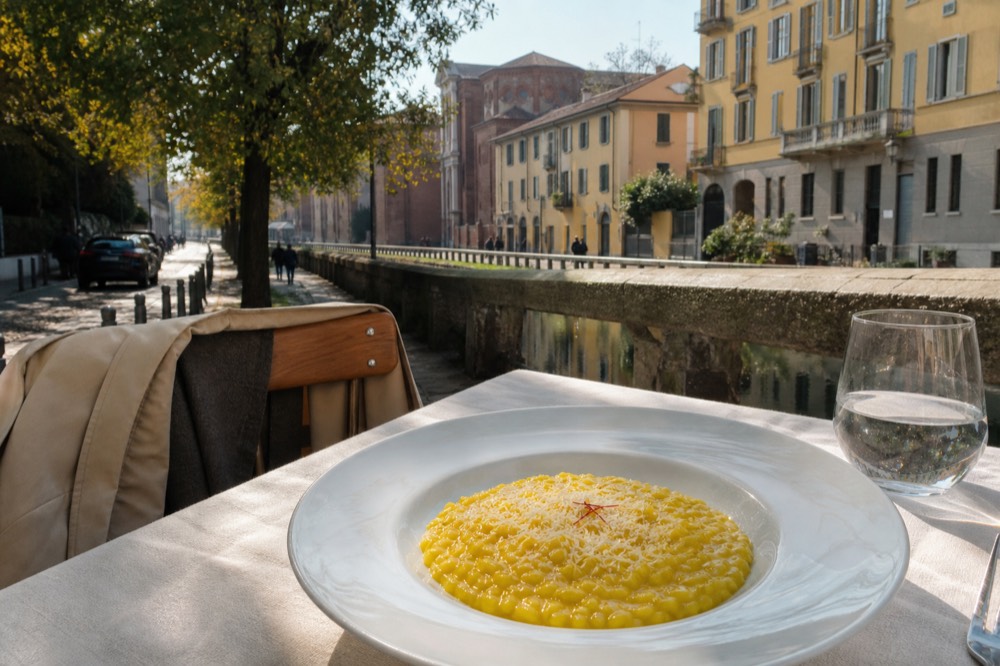
The Milanese lunch plate is not a random Italian plate: it leans on risotto alla milanese, cotoletta, mondeghili, michetta rolls filled with salumi, and the panino made from yesterday's bread, and several of those carry the city's own De.Co. municipal designation rather than any EU protection. The Comune's register recognizes risotto alla milanese and panettone from 2007, cotoletta alla milanese and mondeghili from 2008, and Pan de Mej from 2026.
That De.Co. detail is worth pausing on, because almost every generic article about Italian food gets it wrong. None of Milan's classic dishes hold an EU DOP, IGP or STG designation. What they hold is a Denominazione Comunale, a municipal recognition the Comune di Milano describes as a statement of territorial belonging, established by resolutions in December 2007 and 2008. Risotto, panettone, michetta and cassoeula went on the register in 2007; cotoletta, mondeghili, minestrone alla milanese and others followed in 2008. The freshest entry is Pan de Mej, added in 2026 and tied by the Comune to the feast of San Giorgio on 23 April, a detail almost no outside guide carries.
| Lunchtime product | What it is | Status |
|---|---|---|
| Risotto alla milanese | Saffron risotto, the midday primo | De.Co. 2007 |
| Michetta | The empty Milanese roll, filled to order with salumi | De.Co. 2007 |
| Cotoletta alla milanese | Breaded veal cutlet, the classic secondo | De.Co. 2008 |
| Mondeghili | Fried meatballs, a leftover-meat tradition | De.Co. 2008 |
| Pan de Mej | Cornmeal-and-elderflower sweet bread, tied to 23 April | De.Co. 2026 |
At street level this translates into a short, repeatable repertoire. The bar's hot counter does panini on michetta or on focaccia, with prosciutto, mortadella, taleggio, or the city's own gorgonzola, which is a genuine DOP cheese with 5,421,517 wheels produced in 2025 across Piedmont and Lombardy. The tavola calda does risotto, roasted meats, vegetable contorni by the scoop. The smarter trattoria does the full primo and secondo sequence compressed. And the food halls do all of it in parallel, which is exactly why Eataly consolidated its Milan Smeraldo store around a single Food & Pizza Theatre on the second floor after its autumn 2024 restyling: the lunch rush rewards volume and speed.
The one thing you will not see is cappuccino after the meal. Milk coffee is a morning drink, and the post-lunch espresso is non-negotiable, taken at the counter. If you want the full set of unwritten rules, from coffee timing to the coperto, the classic mistakes visitors make are covered in our piece on the Italian coffee rule, and the wider street-food landscape, where the standing lunch overlaps with the evening passeggiata, is mapped in our Milan street food guide.
Should You Plan Your Visit Around A Milanese Lunch?
Yes, and specifically around lunch rather than dinner, because midday is when Milan's food infrastructure operates at full throttle and at its most local: the food halls are packed with workers not tourists, the menu del giorno is at its best value, and a tasting walk at lunch hours shows you the city's real eating rhythm. Dinner in Milan starts late, around 20:00 or later, and shows you a different, more leisurely city.
There is a practical reason too. Milan's two flagship food halls publish long hours, Mercato Centrale daily 06:30 to 23:00 and Eataly Smeraldo 08:00 to 23:00, but the midday window is when both are genuinely alive, and the surrounding neighbourhoods, Isola for Eataly, the station district for Mercato Centrale, are at their most characteristic. A single ATM ticket at EUR 2.20, valid 90 minutes, connects almost any lunch venue to any other, so you can string a morning market, a standing panino and an afternoon espresso without planning transport at all.
The evening is a different animal, and the difference is now written into city law. The movida ordinance published by the Comune di Milano on 9 June 2026, in force 11 June to 2 November 2026, restricts alcohol takeaway and outdoor seating late at night across 12 zones including Brera, Navigli and Isola. None of that touches lunch. Midday Milan is the unregulated, unhurried-by-law, genuinely local version of the city, and if you only have time for one deeply Milanese meal, make it the 13:00 one.
For a visitor who wants the formats explained rather than just listed, Milan Food Tours maintains a full set of guides, including a dedicated page on Mercato Centrale and a broader look at Milan's food markets, where the food-hall lunch is placed in its market context.
If a guided version of the Milanese lunch appeals, these three walks cover the format at three price points.
The questions below are the ones visitors ask most about the Italian midday meal, and each answer keeps the Milanese reality in view: the pausa pranzo is short, the standing panino is legitimate, the menu del giorno is the best-value full meal, and the two-hour southern lunch is a real tradition but not a Milanese weekday one. Read them before you plan your 13:00.
Common Questions About A Typical Lunch In Italy
What Is A Typical Lunch In Italy?
A primo of pasta, rice or soup, a secondo of meat or fish with a contorno, bread, and an espresso, eaten between roughly 12:30 and 14:30. The structure is national; the pace is not. In Milan the same meal is compressed into a 60-to-90-minute working pause, while the two-hour version is mostly a Sunday and southern tradition.
What Time Do Italians Eat Lunch?
The window runs from about 12:30 to 14:30 nationwide. In Milan the peak is 13:00 sharp, when offices empty into bars, tavole calde and food halls. Kitchens in trattorias typically stop serving the lunch menu around 14:30, so arriving after 14:00 limits your options badly.
Is Lunch In Milan Different From Lunch In Southern Italy?
Yes, and the difference is pace more than food. In much of the south shops still close at 13:00 and families eat at home, sometimes for two hours. In Milan nobody goes home on a working day: the pausa pranzo is 60 to 90 minutes, often eaten standing, and the city does not stop for it.
Do You Have To Sit Down For A Proper Italian Lunch?
No. The standing panino at a bar counter is a fully legitimate Italian lunch, and in Milan it is arguably the most typical one. You order at the register, pay, take the receipt to the counter and eat at the marble. Sitting at a table in the same bar can carry a supplement if it is listed.
What Is A Menu Del Giorno?
A fixed-price lunch menu, printed daily, with a small choice of primi and secondi plus water and coffee. It is how business-district trattorias serve the 13:00 rush: fast, cheaper than the evening menu, and often the best value full meal in the city.
Can I Get A Long Leisurely Lunch In Milan?
Yes, but plan for it. Weekend lunches run longer, fine-dining rooms do not rush you, and a guided tasting walk, such as the 3-hour Small-Group Tastings Walk from $74 per person, is deliberately paced as a long midday meal with commentary. What you cannot do is expect a two-hour lunch to happen by accident on a working Tuesday.
Milan Gourmet Tour: A Premium Tasting Experience By Do Eat Better
Have your travel date in mind? Check the gourmet tasting route before arranging the rest of your Milan food itinerary.
3 hours 30 minutes · English · Meet your guide for the Do Eat Better Experience Milan Food Tour in front of 'Banca Intesa'
Scheduled departure dates. Availability and final price are confirmed on Viator.
None of these experiences matches that choice. Adjust your preference or reset to the general recommendation.
Compare Options And Plan Your Visit
- A longer gourmet tasting route
- Multiple classic dishes over 3.5 hours.
- City sights with tastings
- 2.5-hour sightseeing and food.
- Risotto and wine
- Explicit risotto tasting.
Before Booking
Moderate physical fitness Minimum drinking age 18 Not suitable for severe or life-threatening food allergies Tastings vary by season and availability
Compare complete party totals in the same currency, including any transport, meals or extras you would otherwise buy.